How to Spend Less Time Cleaning: Simple Minimalist Cleaning Routines
If you’re wondering how to spend less time cleaning, the answer isn’t necessarily to clean faster or more often. A simpler home, fewer possessions and a few realistic routines can help you keep your home clean and comfortable without housework taking over your life.
How to Spend Less Time Cleaning
The easiest way to spend less time cleaning is to have less to clean, tidy and maintain in the first place.
Combine that with a few simple daily habits and realistic cleaning routines, and you can keep your home manageable without spending hours on housework.
Housework doesn’t have to be complicated or take up all your precious time and energy.
I know that because one of the reasons I wanted to simplify my own life was my home. There was a time when it felt less like a place of joy, relaxation and laughter and more like another thing on my never-ending to-do list.
There was always something to tidy, something to clean, laundry to deal with, toys and belongings to put away and surfaces that seemed to need attention.
One of the biggest changes I made was to declutter and streamline my home.
And something interesting happened.
The less I owned, the less I had to look after.
There was less stuff to move when I wanted to dust. Fewer things cluttering up surfaces. Less to tidy away. Less to organise. And, perhaps most importantly, less visual clutter making my home feel like it needed my attention all the time.
That’s why I think spending less time cleaning starts before you even pick up the duster.
It starts with simplifying.
12 WAYS TO SPEND LESS TIME CLEANING
Here are some of the things that have helped me spend less time cleaning and create a home that is easier to maintain.
1. Have Less Stuff to Clean
This might sound obvious, but if you have fewer possessions, you have fewer things to clean, tidy, move around and look after.
Think about a kitchen worktop covered with appliances, jars, paperwork and other bits and pieces.
Before you can wipe the worktop, you have to move everything.
Now imagine the same worktop with just the things you use regularly.
The cleaning itself hasn’t changed. But the amount of preparation needed to do it has.
The same applies to shelves, floors, bedside tables, bathroom surfaces, cupboards and pretty much every other area of your home.
As Annie Dillard put it:
“Whatever takes up your space, takes up your time.”
That’s something I think about often when I’m deciding whether to keep something.
- Do I really love this enough to want to spend time looking after it?
- Would I notice if it wasn’t here?
- Does it make my life easier, better or more enjoyable?
- Or has it simply stayed because I’ve never stopped to question whether I still need it?
If you want to spend less time cleaning, decluttering is one of the most effective places to start.
You can read more about this in my guide to how to declutter your home and life.
2. Keep Surfaces as Clear as You Can
Clear surfaces are much easier to clean.
You don’t need to have completely empty rooms or embrace an extreme minimalist lifestyle. It’s simply about noticing which surfaces regularly become difficult to clean because they’re covered with things.
Kitchen worktops are a good example.
So are dining tables, coffee tables, bedside tables and bathroom counters.
If a surface is constantly covered with things, ask yourself whether everything really needs to live there.
- Could some of it have a proper home elsewhere?
- Could you get rid of some of it?
- Could you simply have less on display?
You might find that clearing one particularly cluttered surface makes cleaning that whole area noticeably easier.
And once you’ve experienced that, you may start looking at other areas of your home in the same way.
Here are some tips for a simpler home.
3. Do a Little and Often
If you leave all your housework until it becomes a huge job, it’s much harder to get started.
Instead, try doing smaller amounts more regularly.
You could set a timer for 10, 15 or 30 minutes and concentrate on one particular area or task.
You don’t have to keep going until the whole house is spotless.
When the timer goes off, stop.
Short bursts of housework can feel much more manageable than the idea of spending an entire afternoon cleaning.
You can also use small pockets of time that already exist in your day.
- While the kettle boils, wipe down the kitchen worktop.
- While dinner is cooking, clear away some of the day’s clutter.
- After your shower, give the bathroom a quick wipe if it needs it.
The aim isn’t to turn every spare minute into cleaning time.
It’s to prevent small jobs from becoming big ones.
Further Reading: 2-Minute Habits That Make My Life Easier
4. Create Simple Daily Cleaning Habits
I find that a few small routines make much more difference than trying to clean everything from top to bottom every day.
These are some of the cleaner home habits that help keep my home ticking over.
Make your bed
Making the bed takes very little time but can make the whole bedroom feel calmer and more organised.
It also creates a simple start-of-day habit.
You don’t need a perfect bedroom. Just having the bed made can make the room feel noticeably better.
Reset the kitchen after meals
Try not to let dishes, food and dirty surfaces build up throughout the day if you can help it.
Put dishes into the dishwasher or wash them, wipe down the main surfaces and put food away.
A few minutes after a meal can save you from facing a much bigger job later.
Keep on top of the laundry
Laundry can quickly become one of those jobs that feels overwhelming when it gets left too long.
Find a rhythm that works for your household.
That might mean doing a small load regularly rather than waiting until the laundry basket is overflowing.
There’s no single right routine. The important thing is finding something that prevents laundry from becoming a huge backlog.
Give the bathroom a quick check
Bathrooms are one of those areas where a few small habits can prevent cleaning from becoming a bigger job.
If you notice a spill, smear or splash, deal with it when you see it rather than waiting until it has dried or built up.
You don’t need to scrub the whole bathroom every time you walk past it.
Just deal with what needs attention.
Put your home to bed each night
One of my favourite habits is a quick evening reset.
Return things to where they belong, clear the kitchen surfaces, straighten cushions and deal with anything that has been left out during the day.
It doesn’t have to take long.
The idea is simply to avoid waking up to yesterday’s mess.
A little reset in the evening can make the next morning feel much calmer.
5. Give Everything a Home
One of the reasons tidying can take so long is that things don’t have an obvious place to go.
If you regularly find yourself moving the same things from one surface to another, it may be worth asking whether they have a proper home.
A home doesn’t have to mean a perfectly organised storage system.
It might simply mean:
- keys live in one particular place
- paperwork has a designated spot
- coats go on the same hooks
- shoes have somewhere to be put away
- toys have a basket or cupboard
- cleaning supplies are easy to find
- everyday items are stored where you naturally use them
The easier something is to put away, the more likely you are to do it.
And when things are regularly put back where they belong, there’s less tidying to do later.
6. Make Cleaning Easy to Start
If you have to hunt around for cleaning products every time you need them, you’re adding unnecessary friction to a simple job.
Keep the cleaning supplies you actually use somewhere convenient.
You could keep some products together in one cleaning cupboard or basket, or keep a small selection in the rooms where you use them most.
For example, I like having the things I need for the bathroom easily accessible because it means I can deal with something quickly when I notice it needs cleaning.
The same principle applies to your cleaning equipment.
You don’t need a cupboard full of specialist products and gadgets.
Keep things simple and make the jobs you regularly do as easy as possible to start.
Can you find a way to make cleaning more fun?
7. Share the Housework
If you share your home with other people, you shouldn’t automatically be responsible for all the cleaning.
Housework is household work.
Everyone who is able to contribute can have some responsibility for keeping the home running.
That might mean sharing specific jobs or simply making sure everyone gets into the habit of putting their own things away and helping with everyday tasks.
Children can also get involved with age-appropriate household chores. It’s not only helpful to you; it teaches them valuable life skills too.
You can read more about kids and chores and how to encourage children to help at home.
The aim isn’t to create a complicated rota that everyone has to follow perfectly.
It’s to make maintaining the home a shared responsibility rather than something that automatically falls to one person.
8. Clean as You Go
Cleaning as you go can sound like another thing to remember, but once it becomes part of your normal routine, it can actually save time.
For example:
- Put ingredients away while you’re cooking.
- Wipe up spills when they happen.
- Put things back after you’ve finished using them.
- Load the dishwasher as you go.
- Wipe the kitchen worktop after preparing food.
- Return things to their proper homes rather than leaving them on the nearest surface.
The important thing is not to turn every activity into an opportunity for housework.
It’s simply about finishing small jobs rather than leaving them for later.
That way, the mess doesn’t have as much chance to accumulate.
This is where small habits for a tidy home really help.
9. Forget About a Perfectly Clean Home
Your home is for living in.
It doesn’t need to look like a show home all the time.
There will be days when the laundry is waiting to be folded. There will be crumbs on the floor, fingerprints on the windows and things left on the kitchen worktop.
That’s normal.
I’ve learned that trying to maintain a perfectly clean home can take up far more time and energy than it’s worth.
Unless you clean constantly and nobody actually lives in your home, it’s never going to be spotless.
And that’s okay.
I prefer a home that is clean enough, tidy enough and comfortable enough for us to actually live our lives.
Done is often better than perfect.
You can clean more thoroughly when something genuinely needs it. But you don’t need to spend your life chasing a standard of cleanliness that isn’t realistic or necessary.
10. Focus on the Cleaning That Actually Matters
Not every cleaning job needs to happen every day.
Some things genuinely need regular attention.
Other things can wait.
Think about what makes your home feel clean and comfortable to you.
Perhaps it’s:
- clean kitchen surfaces
- a reasonably tidy bathroom
- clean floors
- fresh bedding
- keeping on top of laundry
- clearing clutter from the main living spaces
Those might be your priorities.
Other jobs can be done less frequently.
You don’t need to follow somebody else’s cleaning schedule simply because that’s how they look after their home.
Your home, your household and your priorities are different.
Create a household routine around what actually matters to you.
11. Don’t Let Clutter Become a Cleaning Problem
One of the best ways to spend less time cleaning is to stop unnecessary clutter coming into your home in the first place.
Every new possession takes up space.
And many possessions also need to be stored, dusted, cleaned, maintained, moved or eventually decluttered.
That’s why I think simplifying your home and simplifying your cleaning routine go hand in hand.
When you notice that a particular area is constantly difficult to clean, don’t automatically look for a better storage solution.
- Ask yourself whether you simply have too much there.
- Perhaps the problem isn’t that you need another basket.
- Perhaps you need fewer things.
This is one of the reasons I always recommend decluttering before organising.
You can read more about why you should declutter instead of organise.
12. Create a Cleaning Routine That Works for You
There’s no perfect cleaning routine.
The best one is the one that fits your life and is realistic enough for you to keep doing.
You might prefer:
- a few minutes every day
- one larger cleaning session each week
- different tasks on different days
- cleaning as you go
- a combination of all of these
Personally, I find that small regular habits help prevent my home from reaching the point where it needs a huge cleaning session.
But your routine might look completely different.
The important thing is that it makes your life easier rather than becoming another thing you’re constantly failing to keep up with.
If you miss a day, start again the next day.
If your routine stops working, change it.
Your cleaning routine should serve you — not the other way around.
How Can I Clean Less?
If you want to spend less time cleaning, I’d start by asking yourself three questions:
1. Do I have too much stuff?
The more you own, the more you have to tidy, clean, move and maintain.
2. What jobs make the biggest difference?
Focus your time on the things that genuinely make your home feel clean and comfortable.
3. What could I do differently so the mess doesn’t build up?
A few small habits can prevent a much bigger job later.
You don’t necessarily need to clean faster.
You may simply need to create less work for yourself in the first place.
A Simpler Way to Keep Your Home Clean
I think we sometimes make cleaning harder than it needs to be.
We buy more cleaning products. We create complicated routines. We try to keep every room spotless. We organise our belongings into increasingly elaborate storage systems.
And then we wonder why looking after our home takes so much time.
- What if we approached it from the other direction?
- What if we owned less?
- What if we kept fewer things on our surfaces?
- What if everything had an easy place to go?
- What if we dealt with small jobs before they became big ones?
- What if we accepted that clean enough really can be good enough?
That’s the approach I prefer.
A simpler home isn’t necessarily a perfectly clean home. It’s a home that is easier to live in and easier to look after.
And that can give you something far more valuable than a spotless house: more time and energy for the rest of your life.
Further Reading
If you’d like to simplify your home and spend less time looking after it, you might also enjoy:
- How to Use the One Hour Cleaning Method to Clean Your Home More Efficiently
- 20 Daily Habits for a Clutter-Free Home – simple habits to help keep clutter under control.
- How to Enjoy Your Home More Without Buying Anything New
- How to Reset Your Home in a Flash – quick ways to restore order when things have got a little out of hand.
- Decluttering and Home Management Tips for When You’re Feeling Overwhelmed
Clear Your Clutter Workbook
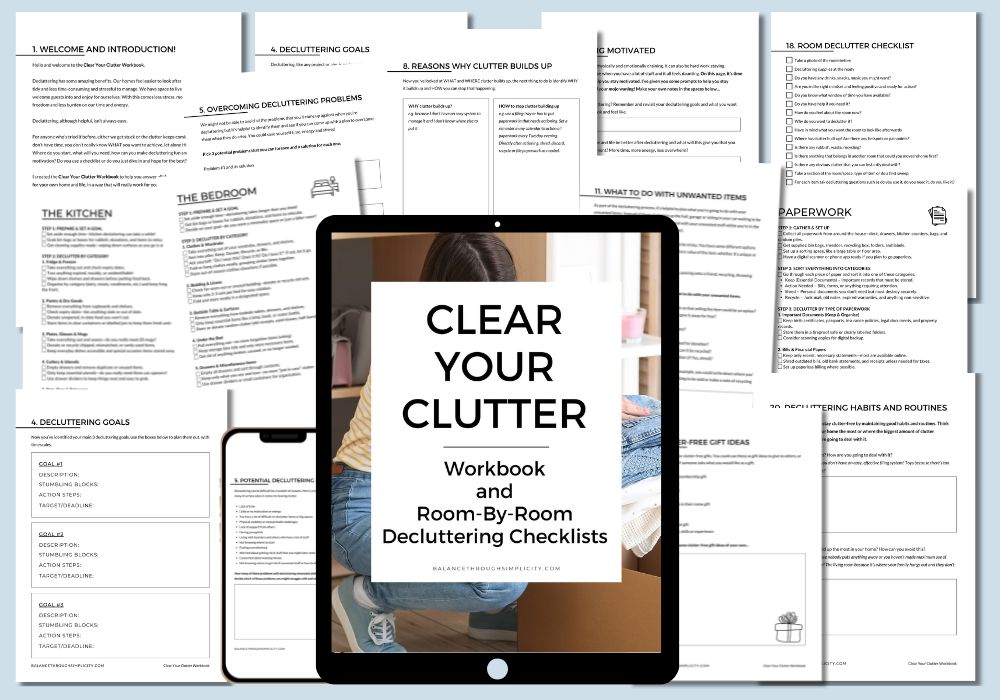
If you’re ready to take the decluttering side of this a little further, my Clear Your Clutter workbook will guide you through the process step by step. It includes practical prompts and exercises to help you decide what to keep, what to let go of and how to create more space and calm throughout your home.
Click here to learn more about Clear Your Clutter.