

How Meal Planning Simplifies Your Life (7 Simple Benefits That Make a Big Difference)
Life can feel busy, noisy and full of small, constant decisions. From what to wear to what to prioritise at work, it’s often the little things that quietly drain our energy throughout the day. And one of the biggest (and most frequent) decisions? What to eat. Discover how meal planning can simplify your life and save you time, money, and stress—while bringing more calm and intention to your week. These seven simple benefits might just change the way you cook, shop and plan forever.
DO MEALTIMES STRESS YOU OUT?
Does the daily “what’s for dinner?” question stress you out more than it should? You’re not alone. Between busy schedules, picky eaters, and never-ending food shops, meals can quickly become a source of overwhelm. In this article we’re looking at how meal planning can make a big difference to your mental load, time and energy.
Decluttering your home, setting up simple systems and routines for keeping it clean and tidy are all great homemaking strategies to reduce the effort and energy required to run your home. They certainly helped me to get things done around the house more easily so I could free up time and mental space to get on with other things I’d rather be doing.
However, mealtimes still were a source of stress. Deciding what to cook for my family more or less every day, that was healthy, budget-friendly and that everyone was likely to enjoy was draining. And, I used to dread the run up to mealtimes because I had all these decisions to make at the end of the day when I was tired and hungry too.
But, once I found a strategy that worked for me, meal planning and a little bit of prep can truly change the game.
WHY MEAL PLANNING MATTERS MORE THAN YOU THINK
When you stop to think about it, meal planning isn’t really about food—it’s about reducing the mental load of everyday life. When you make small decisions ahead of time, you free up energy for the things that matter more.
Instead of reacting to each mealtime as it comes, you move into a more intentional, calm way of running your home. And that shift can make a surprising difference to how your days feel.
It can also make a difference to how you feel. Less rushed, less stressed, less pressure to think about and decide. This in itself is one of the biggest benefits of meal planning that I’ve found in my own life.
HOW CAN MEAL PLANNING SIMPLIFY YOUR LIFE?
Let’s explore how a simple, thoughtful approach to meal planning can make your life easier—and a whole lot calmer. Here are 7 easy ways meal planning can simplify your life.
1. You Save Time Every Single Week
How often do you find yourself standing in front of the fridge, unsure what to cook, or running to the shop last minute for one missing ingredient? Meal planning means you’ve already made the decisions ahead of time. You know what you’re cooking and you’ve already got what you need. No more scrambling.
I’ve found that spending just 20–30 minutes at the weekend planning our meals saves me hours of faffing during the week. It’s amazing how much more smoothly things run when dinner is already sorted. Meal planning is a great way to simplify your time and make a daily task feel much quicker!
Try this:
- Choose 3–5 simple meals for the week ahead
- Repeat your easiest meals on your busiest days
- Keep a short list of quick dinners you can fall back on
2. You Waste Less Food
Food waste is frustrating—not just for your budget but for the planet too. When you plan your meals and shop accordingly, you’re far less likely to forget about that pack of spinach at the back of the fridge or buy random extras that never get used.
One of my favourite habits is planning meals that use up the same ingredients in different ways. If we have roast chicken on Sunday, I’ll use the leftovers in sandwiches or stir-fry the next day. Less waste, more simplicity.
Try this:
- Plan meals that use overlapping ingredients
- Check your fridge before writing your shopping list
- Use leftovers for lunches or next-day dinners
3. You Save Money on Groceries
A meal plan with a matching shopping list stops those impulsive buys that creep in when we shop without a plan. You know what you need, and you stick to it. That alone has helped cut down our grocery bill noticeably.
When I started using the system in my Simple Meal Planning Workbook, I realised how often I used to buy “just in case” items. Now, everything I buy has a purpose—and it shows in our bank balance. I can see this when I look at our household finances every month.
If saving money and better budgeting is important to you, you’ll find more tips and easy guidance in this article on how to simplify your finances.
Try this:
- Shop with a list and stick to it
- Avoid “just in case” items
- Build meals around what you already have
4. You Feel Less Stressed About Mealtimes
Knowing what’s for dinner removes one of the biggest daily stress points. Even if you don’t cook everything in advance, just having a plan can feel like a massive weight off your shoulders.
It’s honestly one of the simplest ways I’ve found to create a calmer home rhythm. There’s no last-minute panic, and everyone knows what’s on the menu. It makes evenings feel much more relaxed.
Try this:
- Decide meals in advance—even loosely
- Write your plan somewhere visible
- Give yourself permission to swap meals around
5. You Make Healthier Choices
Planning ahead gives you the chance to be more intentional about what you eat. Instead of grabbing the quickest (often less healthy) option, you’ve already chosen meals that align with your goals and preferences.
We’ve been able to include more variety and balanced meals since planning ahead—no more relying on ready meals or takeaways when I’ve run out of energy or ideas.
For me, planning my meals so that I always have healthier snack options to reach for and I have better balanced meals have all helped me build better healthier eating habits in general.
Try this:
- Plan at least a few balanced meals each week
- Prep easy snacks ahead of time
- Keep healthy staples stocked and ready
6. You Free Up Mental Space
It’s amazing how much mental clutter disappears when you don’t have to constantly think about what to cook. It’s one less decision, one less worry.
Meal planning became one of my favourite time-saving, brain-calming strategies—especially when life got busy. And the sense of control and ease that came with it felt amazing.
Once I found a meal planning routine that worked for me, it helped me feel more in control of my home and To Do list. I don’t know about you, but I always felt a sense of pressure to keep my family fed with nutritious, healthy food, 7 days a week, 365 days a year. It’s a lot! But meal planning has really helped.
Try this:
- Set a regular time each week to plan meals
- Keep your plan simple and repeatable
- Don’t overthink it—done is better than perfect
7. You Can Involve the Whole Family
Meal planning doesn’t have to be all on you. It’s a great way to get others involved too—whether that’s asking the kids to choose meals, letting your partner help prep, or planning around everyone’s schedules.
I’ve found this to be a great way of reducing tension around mealtimes. I don’t get asked what’s for dinner several times a day, my fussy eaters get a say in what’s on the menu and it becomes more of a team effort.
Try this:
- Let each person choose one meal
- Ask for input before finalising your plan
- Share simple kitchen tasks where possible
WANT TO MAKE MEAL PLANNING EVEN EASIER?
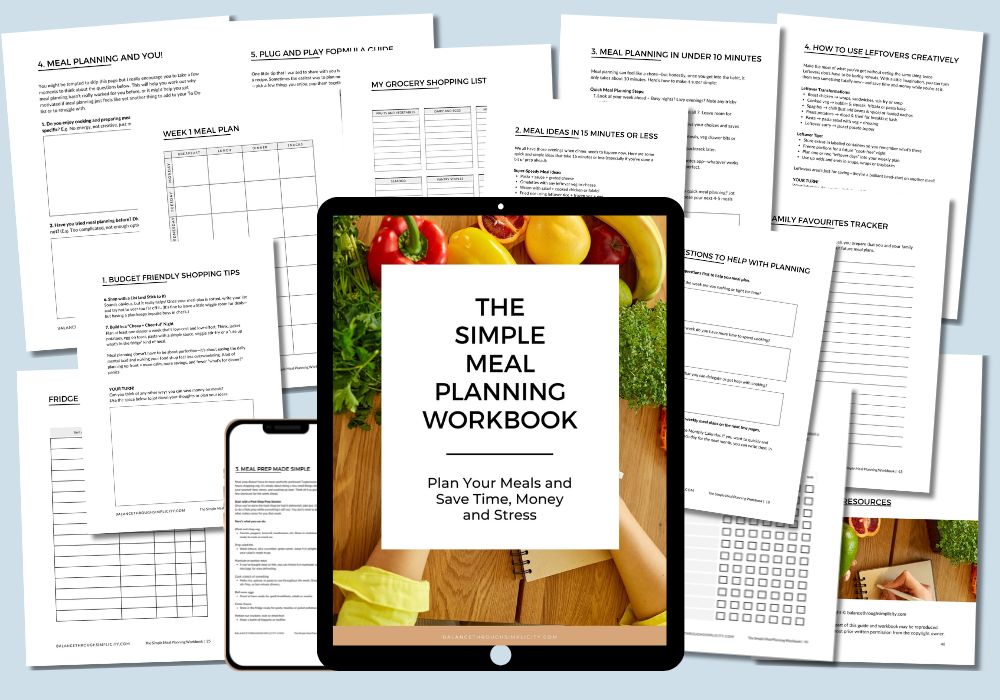
If you’d like a little more structure and support with this, my Simple Meal Planning Workbook is designed to help you keep things easy, flexible and realistic.
It includes:
- Helpful, no-pressure tips for planning meals in a way that works for you
- Theme night ideas to take the stress out of deciding what’s for dinner
- Plug-and-play meal formulas so you’re not starting from scratch every week
- Simple, realistic meal ideas for busy nights (15 minutes or less!)
- Budget-friendly shopping tips to stretch your grocery budget
- Batch cooking & meal prep ideas to save time during the week
- Reusable grocery list templates (by category—for easy planning)
- Weekly + monthly meal planning pages so you can plan and review at a glance
- Reflection and review pages to help you notice what’s working
- Plus space for your own notes, meal ideas, family favourites and more.
It’s designed to be flexible, practical, and easy to use—whether you’re a beginner or want to streamline your existing routine. Click here to learn more about the Simple Meal Planning Workbook.
MEAL PLANNING AND SIMPLE LIVING
Meal planning isn’t about being perfectly organised or having everything figured out. It’s about making small decisions ahead of time so your future self has less to think about.
It’s one of those gentle habits that creates more ease in the background of everyday life—less rushing, less stress, and more breathing space in your evenings.
The best part? You don’t need to do it perfectly to feel the benefits. Even a simple plan for a few meals each week can make a real difference.
Planning your meals and meal prep is also easier if you’re kitchen isn’t cluttered. You’ll have more space to prepare food, it’s easier to clean and tidy away too. Here are some tips on how to declutter your kitchen which you might find helpful.
And over to you… Do you currently plan your meals, or is it something you’d like to try? I’d love to hear what works for you—or what you find most challenging about mealtimes.
FAQS ABOUT MEAL PLANNING
Here are some common questions about meal planning that might help if you’re just getting started:
1. How far ahead should I plan meals?
Most people find a weekly plan works best—it’s flexible but still structured. If that feels like too much, start by planning just 3–4 dinners ahead and build from there.
2. Do I have to prep everything in advance?
Not at all! Meal prep is optional. You can chop veg, batch-cook sauces, or even just lay out ingredients the night before. Do whatever works for you.
3. What if I don’t feel like eating what I planned?
Build in some flexibility. I like to plan 5-7 meals for the week and pick what suits each day. You’re still saving time and effort without being too rigid.
4. Is this suitable for fussy eaters?
Yes! In fact, it helps. Letting everyone pick a meal or offering a few choices within your plan can reduce complaints and make dinnertime smoother.
5. Do I need fancy tools or apps?
Not at all. A pen and notebook will do. But if you’d like something printable and ready to use, the Simple Meal Planning Workbook is a great place to start.
Here are some more articles you might enjoy around meal planning and healthier eating:
WANT A QUICK FREE MEAL PLANNING TEMPLATE?
If you’re just looking for a quick template to help you plan next week’s meals, here’s a free meal planning template you could use.
(Note: The Simple Meal Planning Workbook is much more detailed and walks you through the meal planning process step-by-step with meal ideas and lots of questions and answer prompts to help you make meal planning work for you and your life.)
However, if you just want a quick meal planning sheet, you could get this free printable. Pop your details in the box below so I know where to send it!