

Why Done is Better Than Perfect: 7 Ways to Stop Holding Yourself Back
Have you ever put off doing something because you wanted to get it just right? Or spent so long planning, tweaking and second-guessing yourself that the thing you wanted to do never actually got finished? Sometimes, done is better than perfect.
WHEN DONE IS BETTER THAN PERFECT
I’m a perfectionist by nature, and I know how easy it is to get caught up in wanting things to be just right. You want to make the best decision, do the best job and feel confident that you’ve got everything sorted before you move on.
But here’s the problem. While you’re busy trying to get everything perfect, you’re not necessarily making progress. You might be using up your time, energy and headspace on tiny details that don’t really matter, while the things you genuinely want to achieve remain unfinished.
Perfectionism can affect all sorts of areas of our lives, from our work and home to our personal goals, hobbies and relationships. It can fuel procrastination, make everyday tasks feel harder than they need to be and leave us feeling frustrated with ourselves.
And when life is already busy, the last thing we need is to make everything more complicated.
That’s why I love the idea that done is better than perfect. It’s a reminder that you don’t have to get everything right to make progress, and you don’t have to wait until you feel completely ready to take the next step.
Further Reading: 14 Mindset Shifts That Can Help You Simplify Life and Feel Less Overwhelmed
7 WAYS TO EMBRACE DONE IS BETTER THAN PERFECT
Here are seven ways to embrace this mindset, stop holding yourself back and make a little more room for ease, calm and the things that matter to you.
1. Recognise when perfectionism is holding you back
Perfectionism can be sneaky. It doesn’t always look like spending hours polishing something. Sometimes, it looks like procrastination, indecision or waiting for the right moment to begin.
Perhaps you want to start exercising, but you haven’t found the perfect routine. You’d love to declutter your home, but you feel you need an entire weekend to do it properly. Or you’ve got an idea for a project, but you keep researching because you don’t feel ready to start.
You might tell yourself you’re being thorough or preparing properly, when actually you’re putting off the possibility of making a mistake.
I’ve noticed how easily the desire to get something right can turn a straightforward task into a much bigger undertaking. Instead of simply making progress, I start thinking about all the different ways I could improve it, until the original task feels far more complicated than it needs to be.
The first step is recognising what’s happening.
Ask yourself whether you’re genuinely improving the result or simply finding reasons not to finish. Sometimes, good preparation is useful. But sometimes, it’s perfectionism keeping you stuck.
Try this: Think of one thing you’ve been putting off. Ask yourself, “Am I waiting because I genuinely need to do more preparation, or because I’m worried it won’t be good enough?” Being honest with yourself can help you decide what to do next.
Further Reading: 9 Ways Perfectionism May Be Holding You Back

2. Decide what ‘good enough’ looks like before you begin
One of the problems with perfectionism is that the finish line keeps moving.
You finish a task, notice something else you could improve and decide to make another change. Before you know it, a job that should have taken an hour has taken an entire afternoon.
A helpful way to avoid this is to decide what ‘good enough’ looks like before you start.
If you’re cleaning the kitchen, perhaps good enough means clean worktops, an empty sink and the dishes put away. It doesn’t mean reorganising every cupboard while you’re at it.
If you’re writing an email, perhaps good enough means it’s clear, friendly and accurate. It doesn’t need to be rewritten six times to find the perfect opening sentence.
And if you’re working towards a personal goal, good enough might mean showing up consistently rather than achieving an ideal result every single time.
This is particularly useful for household tasks and everyday responsibilities, where there’s almost always something else you could do.
Remember, the purpose of many everyday tasks is simply to get them done so you can move on with your life.
Try this: Before starting your next task, decide on three things that would make it complete. Once you’ve achieved them, give yourself permission to stop.
Further Reading: How to Find More Simplicity in Life: 5 Powerful Ways to Clear Clutter and Live Intentionally
3. Take action before you feel completely ready
How often have you waited until you felt motivated, confident or fully prepared before starting something?
Perhaps you wanted to learn a new skill, try a different hobby or make a change to your routine. You told yourself you’d begin when you had more time, knew a little more or felt more confident.
But sometimes, that perfect moment never arrives.
It’s easy to believe that confidence needs to come before action. In reality, taking a small step can help you learn, build experience and feel more comfortable as you go.
You don’t need to know exactly how everything will work out before you begin. You simply need to know enough to take the next sensible step.
This applies to all sorts of things, from starting a decluttering project to developing a new habit or working towards a bigger personal goal.
You might discover that your original plan needs adjusting. That’s fine. You can learn as you go rather than trying to predict every possible problem in advance.
Try this: Choose something you’ve been waiting to feel ready for and identify one small action you can take today. Don’t worry about the whole journey. Focus on getting started.
Further Reading: Why Imperfect Action Can Be Better Than Perfect Planning

4. Set a time limit to stop yourself overthinking
Sometimes, perfectionism shows up in the amount of time we spend on a task.
You might spend far too long choosing what to wear, researching a purchase, writing a message or deciding how to organise something at home.
You want to make the right choice, so you keep looking for more information or considering more options. But eventually, the extra time and effort stop making much difference to the outcome.
Setting a time limit can help.
For example, give yourself fifteen minutes to plan your meals, twenty minutes to sort through a drawer or half an hour to draft a piece of writing. When the time is up, review what you’ve done and decide whether it meets your original definition of good enough.
This is where time management and mindset work together. You’re not just trying to work faster. You’re learning to recognise when additional effort isn’t adding enough value to justify the time it takes.
If you find yourself repeatedly revisiting the same task, a timer can also provide a useful boundary.
You can always return to something later if it’s genuinely necessary. But you don’t need to keep polishing every little detail simply because you can.
Try this: Pick one task today that tends to take you longer than necessary. Set a realistic timer and aim to finish within that time, without compromising anything genuinely important.
Further Reading: Overthinking Everything? How to Break Through Paralysis by Analysis and Get Started
5. Break big goals into small, imperfect steps
Sometimes, we don’t make progress because we’re looking at the whole mountain instead of the next step.
You might want to declutter your entire home, improve your health, get your finances organised or make more time for yourself. These are worthwhile goals, but they can feel overwhelming when you think about everything involved.
And when you want to do something properly, it can be tempting to wait until you have enough time and energy to tackle the whole thing.
Instead, break your goal down into small steps that you can manage around your everyday life.
If you want to declutter your home, start with one drawer rather than the entire house. If you want to get fitter, begin with a short walk rather than waiting until you can commit to a perfect exercise programme. If you want to make more time for yourself, start with ten quiet minutes rather than trying to redesign your entire routine.
Small steps might not feel particularly impressive, but they help you build momentum without creating unnecessary pressure.
This is one reason I believe simple living is so valuable. It encourages us to focus on what matters, take things one step at a time and stop making life harder than it needs to be.
Try this: Choose one goal that’s been sitting on your wish list. Break it into three small steps and identify the easiest one to begin today.
Further Reading: How to Set Meaningful Goals That You’ll Actually Keep

6. Stop measuring your progress against an impossible standard
Perfectionism often comes with a long list of expectations about how things should be.
Your home should look a certain way. Your work should always be excellent. Your routines should be consistent. You should be making progress on all your goals while keeping everything else in your life running smoothly.
It’s exhausting just thinking about it!
And when you compare your everyday reality with an idealised version of how you think things ought to be, it’s easy to feel that you’re falling short.
I’ve had to remind myself that wanting to improve things doesn’t mean I have to fix everything at once. There’s always another task to complete, another idea to explore or another area of life I could work on. If I treat every possibility as something I must get right, I’ll never feel as though I’ve done enough.
Instead, try measuring progress by what you’ve achieved, rather than by how far you are from some imagined perfect result.
Did you take a step towards a goal? Did you make something easier? Did you do something that mattered, even if you didn’t do it exactly as planned?
That counts.
Your life doesn’t have to look perfect to be a good life. Your home doesn’t have to be immaculate for it to feel welcoming. And you don’t have to achieve every goal to feel proud of what you’ve done.
Try this: At the end of today, write down three things you’ve done, however small. Resist the temptation to add a list of things you should have done as well. Give yourself a moment to recognise your progress.
Further Reading: 7 Goals That Could Change the Way You Think About Success
7. Let go of the tasks that don’t deserve your energy
Sometimes, the kindest thing you can do for yourself is decide that something doesn’t need doing at all.
Perfectionism can make us feel responsible for completing every task, following through on every idea and making everything as good as it possibly can be.
But our time and energy are limited. If we spend them trying to perfect things that aren’t particularly important, we have less available for the people, experiences and priorities that matter most to us.
Take a look at your to-do list. Are there tasks you’ve been putting off for months because you can’t quite bring yourself to do them? Are there things you keep meaning to improve, even though they would make very little difference to your life?
You might find that some tasks need doing, others can be simplified, and a few can be removed altogether.
I’ve recently written about how to stop your to-do list overwhelming you, including how to decide whether a lingering task needs to be done, scheduled, delegated or deleted.
It’s worth remembering that an unfinished task isn’t always a problem that needs solving. Sometimes, it’s simply a commitment you no longer need to carry.
When you let go of the things that don’t matter, you create more space for the things that do.
Try this: Look through your to-do list and choose one task that no longer deserves your time or attention. Cross it off, without guilt, and use the time or energy you’ve saved for something more meaningful.
Further Reading: How to Stop Your To-Do List Overwhelming You

Want to make getting things done feel easier?
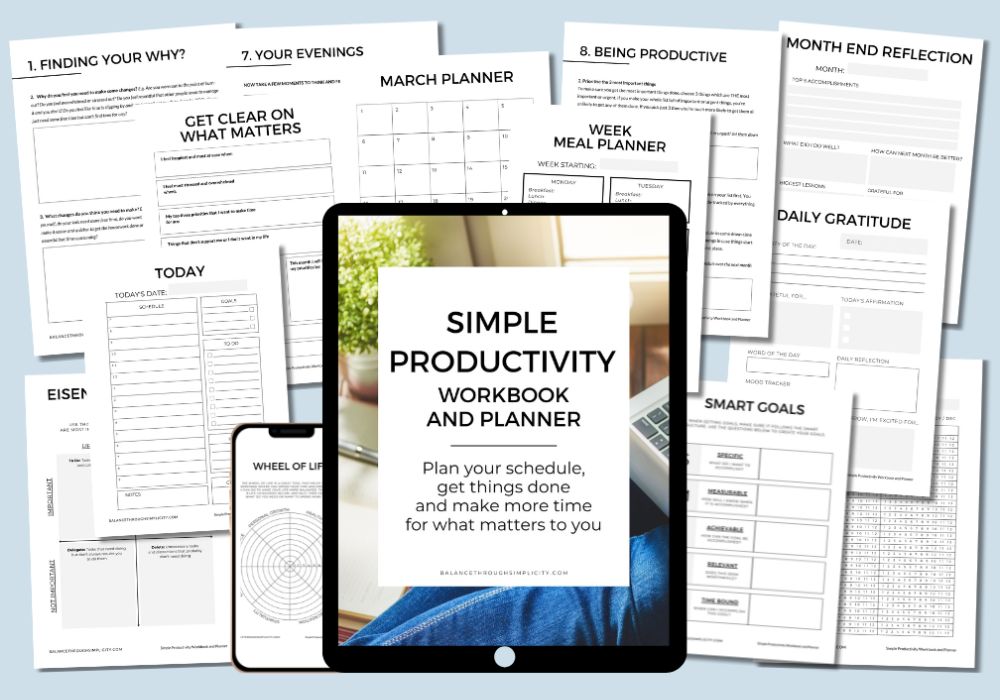
My Simple Productivity Workbook and Planner can help you organise your tasks, clarify your priorities and create a planning routine that works for your life.
With practical exercises and printable planning pages, you can build a simpler approach to managing your time without feeling that you need to do everything perfectly.
Remember, the goal isn’t to squeeze more into your day. It’s to make progress on what matters most, with a little less stress and overwhelm.
Click here to learn more about Simple Productivity.
And over to you
The idea that done is better than perfect isn’t about lowering your standards or not caring about the things you do. It’s about learning to recognise when your efforts are helping you move forward and when they’re keeping you stuck.
It’s about understanding that you can do a good job without doing everything perfectly. You can make progress without having the whole plan worked out. And you can build a life you’re happy with without constantly trying to improve every little detail.
If you’re someone who struggles with perfectionism, please be kind to yourself. Wanting to do things well isn’t a bad thing. But you deserve to enjoy the process of living, too, rather than spending all your time worrying about whether you’re getting everything right.
You don’t have to tackle every task, achieve every goal or meet every expectation.
Sometimes, the best thing you can do is take a small step, accept that it might not be perfect and let that be enough.
Over to you: Is perfectionism something you struggle with? What’s one thing you could stop overthinking, simplify or let go of this week?
I’d love to hear your thoughts.
And remember, a simpler, calmer life isn’t built by getting everything right. It’s built by making intentional choices about what matters and giving yourself permission to let the rest be good enough.
Here are some more articles you might enjoy next:
- Progress Not Perfection in Decluttering and Why It’s Important
- 10 Ways to Reduce Distractions in a Cluttered and Noisy World
- 9 Minimalist Principles That Have Nothing to Do With Your Stuff
- 7 Ways to Stop Living on Autopilot and Start Being More Intentional
- How to Simplify Your Time and Be More Productive at Home and Life
- Can Minimalism Help You Manage Your Time Better? 7 Simple Ideas
- 8 Ways to Stop Your To-Do List Overwhelming You (and Finally Get Things Done)