The Move Out Method: Declutter Your Home Like You’re Moving Tomorrow
What if you had to pack up your entire home and move tomorrow? Would you take everything with you, or would you finally let go of the things you’ve been meaning to declutter for years? The Move Out Method is a simple way to create a sense of urgency, rethink what you’re keeping and find the motivation to declutter your home without waiting for the perfect time to begin.
What Is the Move Out Method?
Have you ever wondered how much of what you own you’d actually choose to take with you if you were moving house? Not just the things you use every day, but the boxes in the loft, the clothes at the back of your wardrobe, the kitchen gadgets you rarely touch and all those little bits and pieces you’ve accumulated over the years.
When we’re settled in our homes, it’s easy to let belongings build up gradually. We keep things because they might come in handy, because they cost money or because we feel we ought to hold on to them. Before long, we can find ourselves surrounded by things we no longer use, need or particularly want.
The Move Out Method encourages you to imagine that you’re moving house and ask yourself a simple question: Would I pack this item and take it with me to my new home?
It’s a useful way to look at your belongings with fresh eyes. Rather than automatically keeping something because it’s already there, you start thinking about whether it’s worth the effort of packing, transporting and finding space for it all over again.
I’ve found that sometimes we need a different perspective to help us make decisions about our belongings. When something has been in the same cupboard for years, it can feel as though it belongs there simply because it’s always been there. Imagining a fresh start can help you question that assumption.
You don’t need to be planning an actual house move to try this method. Here’s how to use it to motivate yourself to declutter, one manageable step at a time.
1. Imagine You’re Moving Into a New Home
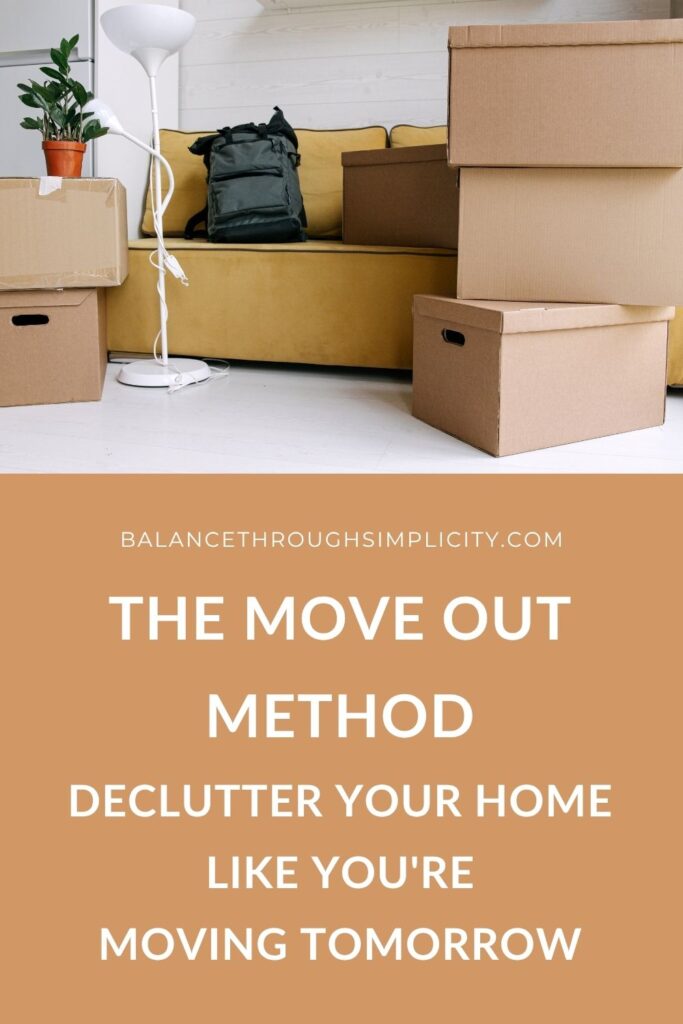
Start by picturing yourself moving into a new home. Imagine standing in your current house, knowing that everything you decide to keep will need to be packed, carried out, transported and unpacked again.
Would you really want to take every single thing with you? Or would you welcome the opportunity to start afresh with belongings that suit your life today?
You don’t have to imagine living in a completely minimalist home with hardly anything in it. Think instead about what you’d genuinely want in your next home, what you’d use regularly and what would make everyday life easier.
I’ve noticed how easy it is to become accustomed to the things around us. Something can sit on a shelf or in a cupboard for years without us really questioning whether we still need it. Thinking about a fresh start encourages me to look at those belongings differently, rather than simply accepting them as part of the house.
Try this: Choose one room and imagine you’re moving out of it tomorrow. Look around and identify five things you wouldn’t bother packing and taking with you.
2. Ask Yourself Whether Each Item Is Worth Moving
Now comes the important part: looking at your belongings and making decisions.
As you work through a room, pick up individual items and ask yourself whether you’d genuinely want to take them to your new home. Consider whether you use them, whether they serve a purpose and whether they still fit your lifestyle.
This can be particularly helpful with things you’ve been keeping out of habit. Perhaps you have clothes that no longer fit, kitchen equipment you never use or decorative items that you don’t particularly like but feel you should keep.
You might also discover things you’ve forgotten you owned. If you haven’t used something for years, it’s worth considering whether you really need to give it space in your home.
I think one of the tricky things about decluttering is that we can become so used to our belongings that we stop noticing them. Asking whether I’d choose to pack something for a new home gives me a different question to consider. Instead of thinking about whether I could use it one day, I can think about whether I actually want it in my life.
Try this: Work through one drawer, shelf or cupboard and ask yourself some questions to help you declutter. For each item, ask yourself, “If I were moving tomorrow, would I choose to take this with me?” Use your answer to help guide your decision.
3. Give Yourself a Deadline
One of the reasons decluttering can drag on for months or even years is that there’s often no particular deadline to finish it. We tell ourselves we’ll get around to it when we’re less busy, have more energy or have a free weekend.
The Move Out Method introduces a little urgency by giving you a pretend moving date. You might imagine that you have a week to prepare, or simply challenge yourself to make progress before the end of the day.
The deadline isn’t there to make you feel pressured or guilty. It’s there to help you stop putting things off and start taking action.
I’ve learnt that having a clear starting point can make a task feel less daunting. When I look at everything that needs doing around the house, it’s easy to feel overwhelmed and struggle to decide where to begin. Giving myself a small, specific task helps me move from thinking about doing something to actually doing it.
Try this: Choose a realistic deadline for one small decluttering project. It might be sorting a bedside table by this evening or clearing a wardrobe shelf by the end of the week. Make the deadline motivating rather than stressful.
4. Stop Paying for Things You Don’t Really Want to Keep
One of the most useful questions the Move Out Method raises is whether an item is worth the effort and cost of moving.
Imagine paying someone to pack up everything in your home. Would you really want to pay them to box up the clothes you never wear, the broken gadgets in the kitchen drawer or the decorations you’ve kept out of obligation?
Of course, you don’t have to pay anyone to move your belongings for the question to be useful. It’s about recognising that everything you own takes up something, whether that’s physical space, time spent cleaning and organising, or attention when you’re deciding what to do with it.
You may also find yourself holding on to things because they were expensive. But the money has already been spent. Keeping an item you don’t use won’t bring that money back, and you don’t have to give it a permanent place in your home simply because you paid for it.
I think it’s easy to feel that getting rid of something means admitting a mistake, particularly if we’ve spent money on it or once thought it would be useful. But our needs change, and sometimes we buy things that don’t work out as we’d hoped. I’d rather focus on whether an item is useful to me now than keep it out of guilt.
Try this: Find three things you’ve been keeping because they cost money or might come in handy. Ask yourself whether you’d choose to pack them for a new home today.
5. Be Kind to Yourself With Sentimental Belongings
Not everything is easy to decide about, and sentimental belongings can be especially difficult.
Photographs, family keepsakes, gifts and items connected to important memories can carry a great deal of emotional meaning. The Move Out Method isn’t about forcing yourself to get rid of those things or pretending they don’t matter.
Instead, use the question to help you decide which items you’d genuinely want to take with you into the next chapter of your life. You might choose to keep a few particularly meaningful possessions, create a memory box or photograph something that holds a memory but no longer needs to take up physical space.
And if you’re not ready to make a decision, that’s OK. You can put the item aside and return to it another time.
I’ve come to appreciate that decluttering isn’t always just a practical exercise. Some decisions involve memories, feelings and the different stages of life we’ve been through. I don’t think we need to rush those decisions to make progress elsewhere in our homes. It’s perfectly reasonable to take more time with the things that matter most to us.
Try this: Choose one small collection of sentimental items and decide which ones you’d most want to take to a new home. There’s no need to tackle every memory box or family keepsake in one sitting.
6. Decide What Happens to the Things You’re Letting Go
Once you’ve decided what you wouldn’t take with you, make a plan for those belongings.
You might have items in good condition that could be donated to charity, sold to someone who would appreciate them or passed on to family and friends. Other things may be suitable for recycling, whilst broken or unusable items may need to be disposed of responsibly.
The important thing is to follow through. If you put unwanted belongings into bags and boxes but leave them sitting in the hallway for months, you’ve simply moved the clutter from one place to another.
You don’t need to deal with everything immediately, but having a clear plan will help you finish what you’ve started.
I’ve found that decluttering feels much more satisfying when the things I’ve decided to let go of actually leave the house. Otherwise, the bags and boxes become another thing to manage, and I don’t get the full benefit of the work I’ve done.
Try this: Before you finish your decluttering session, put donations by the door or in your car, arrange a collection or set a date to take them to a charity shop. Deal with rubbish and recycling appropriately.
7. Enjoy the Feeling of a Fresh Start
Once you’ve worked through an area, take a moment to look at the difference you’ve made. Notice the extra space, the clearer surfaces and how much easier it is to find the things you actually use.
You might find that you can access a cupboard without moving several other things first, clean a surface more easily or see exactly what you own. These small improvements can make everyday life feel less complicated.
You don’t need to declutter an entire room, let alone the whole house, before you can enjoy those benefits. Every small area you complete is progress.
I know how tempting it can be to focus on all the things that still need doing rather than appreciate what’s already been achieved. When there’s a lot to organise, it’s easy to feel that you’ve barely made a dent. I’m trying to remember that a clearer drawer or cupboard still counts, even when the rest of the house isn’t finished.
Try this: When you’ve finished an area, take a moment to appreciate it. Notice what’s easier now, and let yourself feel pleased with the progress you’ve made before moving on to the next task.
Over to You
The Move Out Method is a simple way to look at your belongings with fresh eyes. By imagining that you’re moving house, you can introduce a sense of urgency, question what you’re keeping and focus on the things you’d genuinely want in your next home.
You don’t need to make dramatic decisions or declutter everything at once. Start with one small area, use the moving question to guide you and give yourself time to work through anything that feels difficult.
Remember, the aim isn’t to create a perfect home or get rid of as much as possible. It’s to make room for the things that matter to you and create a home that’s easier to live in and look after.
I’d love to hear from you! If you were moving house tomorrow, what is one thing you’d be happy to leave behind? Share your thoughts in the comments below. You might inspire someone else to look at their clutter a little differently, too!
Here are some more articles you might enjoy reading next:
- 7 Signs It’s Time to Let Go of Clutter That’s Holding You Back
- How to Start Decluttering When You Have a Lifetime of Stuff: 7 Simple Steps
- 11 Simple Ways to Declutter a Small Home When Space Is Tight
- 8 Signs It’s Time to Declutter Your Home
- No Motivation to Declutter? 12 Ways to Get Yourself Started
- How to Use the Pomodoro Method to Declutter Your Home
WANT MORE HELP TO CLEAR YOUR CLUTTER?
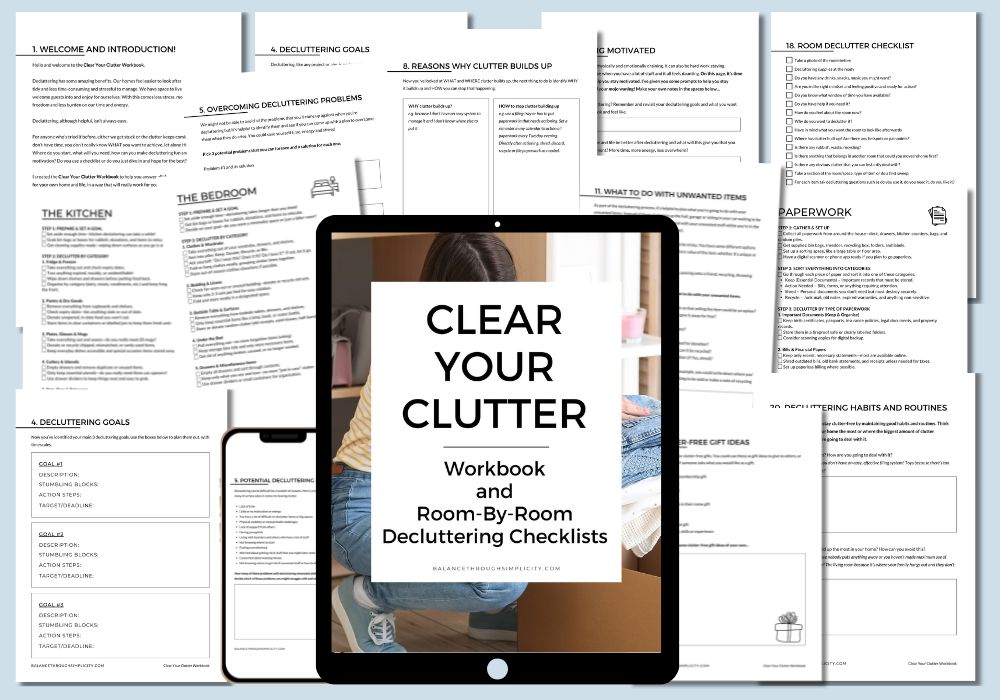
Create a calmer, more organised home with a simple step-by-step plan that helps you declutter with confidence. My Clear Your Clutter Workbook and room-by-room decluttering checklists will help you understand how and what to declutter and give you the motivation to actually get it done!
Click here to learn more about Clear Your Clutter.