
How to Use the Pomodoro Method to Declutter Your Home
Discover how to use the Pomodoro method to declutter your home, one small step at a time. With short, focused sessions and regular breaks, you can make progress without feeling overwhelmed.
How Can the Pomodoro Method Help You Declutter Your Home?
Decluttering your home can feel like a big job, especially when you look around and see so many things that need sorting. You might want to tackle the kitchen cupboards, clear the spare room or finally get on top of the piles of paperwork, but finding the time and energy to get started isn’t always easy.
One simple way to make decluttering feel more manageable is to use the Pomodoro method.
The Pomodoro method is a time management technique that involves working for a set period of time, taking a short break and then repeating the process. It’s often used to help people concentrate on work, but it’s just as useful for decluttering your home.
Instead of spending an entire afternoon sorting through your belongings, you can focus on one small task at a time. You’ll have a clear starting point, a set amount of time to work and permission to stop when your timer goes off.
In this article, I’ll show you how to use the Pomodoro method to declutter your home, how to choose the right tasks and how to make the most of each session without feeling overwhelmed.
What Is the Pomodoro Method?
The Pomodoro method is a simple technique for breaking work into focused intervals, with short breaks in between.
The traditional approach looks like this:
- Work for 25 minutes.
- Take a five-minute break.
- Repeat the process.
- After four work sessions, take a longer break of around 15–30 minutes.
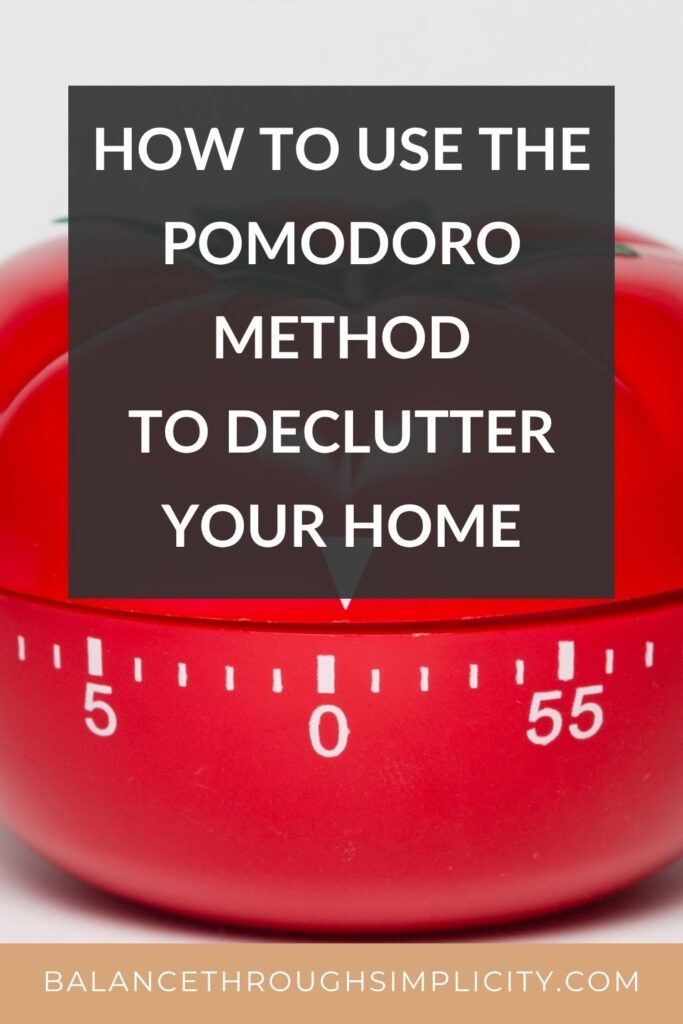
Each focused work period is called a Pomodoro, named after the tomato-shaped kitchen timer that the technique’s creator, Francesco Cirillo, used when developing the method.
The idea is to make a task feel less daunting by giving it your full attention for a limited amount of time, rather than expecting yourself to work on it until it’s finished.
When it comes to decluttering, this can be particularly helpful. You don’t need to empty an entire wardrobe, sort every kitchen cupboard or clear a whole room in one go.
You simply need to decide what you’re going to work on for the next 25 minutes.
And if 25 minutes feels too long, you can shorten your sessions. Even 10 minutes of focused decluttering can make a difference.
Why the Pomodoro Method Works for Decluttering
Decluttering isn’t always as straightforward as putting things away. You need to make decisions about what to keep, what to let go of and where everything belongs.
That can take time and mental energy, particularly when you’re tired, busy or already feeling overwhelmed by the amount you have to do.
Using the Pomodoro method can help in several ways.
It makes a big job feel smaller. Instead of thinking about decluttering your entire home, you can focus on one drawer, one shelf or one small area.
It gives you a clear starting point. Knowing that you’re only committing to a short session can make it easier to get started, even when you don’t feel particularly motivated.
It helps you stay focused. When you have a timer running and a specific task in mind, you’re less likely to drift between different rooms or start several jobs at once.
It encourages regular progress. You don’t need a free weekend to make a difference. A single session can be enough to clear a cluttered surface or sort through a small collection of belongings.
It helps you recognise your limits. Regular breaks give you a chance to rest, step away from difficult decisions and return with a clearer head.
The aim isn’t to declutter as quickly as possible. It’s to make steady progress in a way that fits into your everyday life.
How to Use the Pomodoro Method to Declutter Your Home
You don’t need any special equipment or an elaborate plan to get started. A timer, a little space to work and a clear idea of what you’d like to achieve are enough.
Here are the steps to follow.
Step 1: Choose One Small Area to Declutter
Before you start your timer, decide exactly what you’re going to work on.
Try to be specific. Rather than choosing something broad, such as “declutter the kitchen”, choose a task you can make meaningful progress on in one session.
For example, you could:
- Clear the kitchen worktops.
- Sort through one kitchen drawer.
- Declutter your bedside table.
- Go through the toiletries in one bathroom cupboard.
- Sort a pile of paperwork.
- Clear the shoes and bags by the front door.
- Declutter one shelf in your wardrobe.
Choosing a small, defined area helps you avoid taking on more than you can reasonably manage.
It’s also worth considering how much energy you have available. If you’re tired or short on time, choose something straightforward. Save more complicated tasks, such as sorting sentimental belongings, for when you have the time and headspace to deal with them.
Your aim is to make one small area better, not to finish an entire room.
Step 2: Decide What You Want to Achieve
Once you’ve chosen your area, think about what a successful session would look like.
This doesn’t need to be a long list of tasks. One simple goal is often enough.
For example:
- Remove the things that don’t belong on the kitchen worktop.
- Sort through the toiletries and remove anything that’s no longer usable or needed.
- Decide which papers need keeping and which can be recycled securely.
- Identify the clothes you no longer wear or need.
- Clear the items that have accumulated on the dining table.
Having a clear goal for your decluttering helps you stay focused when you begin.
It also gives you a useful way to measure your progress. You might not finish everything in the area, but you can still finish the task you set yourself.
Step 3: Set Your Timer for 25 Minutes
Set a timer for 25 minutes and begin decluttering.
During this time, concentrate on the area you’ve chosen. Try not to move into another room to put something away, start cleaning the oven or get distracted by another job that catches your eye.
If you find something that belongs elsewhere, place it in a small basket or designated spot to deal with later. You can return these items to their proper homes when your session is over.
Work through your belongings, making decisions as you go.
Ask yourself:
- Do I use this?
- Do I need it?
- Do I have something else that does the same job?
- Would I choose to keep this if I were making space for it today?
- Does this item belong in this area?
You don’t need to overthink every decision. For straightforward items, a quick decision is usually enough.
If you come across something you’re unsure about, set it aside and move on to something easier. You can return to it later rather than allowing one difficult decision to bring your whole session to a halt.
Remember, the timer is there to help you focus, not to make you rush.
Step 4: Take a Five-Minute Break
When your timer goes off, stop and take a short break.
It can be tempting to carry on, particularly when you’re making good progress. But one of the useful parts of the Pomodoro method is that it builds rest into the process.
Stand up, stretch, have a drink of water or simply sit down for a few minutes.
Try to step away from the decluttering task rather than using your break to start another household job.
When you return, you’ll have a fresh opportunity to decide what to work on next.
If you’ve only planned one session, you can finish here. You don’t need to complete multiple rounds for the method to be worthwhile.
Step 5: Repeat the Process If You Have the Time and Energy
If you have more time available, you can start another 25-minute session.
You might continue with the same area or choose another small task, depending on what you’ve achieved and how much energy you have left.
For example, after sorting one kitchen drawer, you could move on to the next drawer. Or, if you’ve cleared your bedside table, you could tackle the top drawer.
After four focused sessions, take a longer break.
There’s no need to force yourself to complete four sessions every time. One session might be all you have time for on a busy weekday, while a quieter afternoon might allow you to fit in two or three.
The important thing is to work at a pace that feels manageable and sustainable.
Step 6: Finish by Putting Things Away
Before you finish for the day, take a few minutes to deal with the items you’ve removed from your decluttering area.
Put the things you’re keeping back where they belong, gather donations together and recycle or dispose of unwanted items appropriately.
If you’ve collected belongings that belong in other rooms, return them to their homes if you have the time and energy. Otherwise, keep them together in a designated basket so they don’t become another pile of clutter.
Be mindful of anything that needs special handling. Personal documents should be disposed of securely, and items such as batteries, electrical equipment and certain household products may need to go to an appropriate recycling or disposal facility.
Try not to leave bags of donations sitting around for weeks. If you can, choose a time to take them to a local charity shop or arrange collection.
Finally, take a moment to notice what you’ve achieved.
Even if you haven’t finished the whole area, you’ve made a start, removed some clutter and created a little more breathing room in your home.
That counts as progress.
How to Use the Pomodoro Method in Different Rooms
One of the best things about the Pomodoro method is that you can use it almost anywhere in your home.
Here are some ideas to help you get started.
In the Kitchen
The kitchen can be a good place to begin because it’s often used throughout the day and small changes can make everyday tasks easier.
Try using one session to:
- Clear and declutter the kitchen worktops.
- Sort through one drawer of utensils.
- Check mugs, glasses or water bottles and remove any you no longer need.
- Go through a single food cupboard, checking dates and removing anything unsuitable.
- Sort through food storage containers and match lids to their containers.
Don’t try to tackle every cupboard at once. Choose one area and work through it before moving on.
In the Bedroom
Bedrooms can gradually accumulate clothes, books, toiletries and all sorts of things that don’t have a proper home.
Use a Pomodoro session to:
- Clear your bedside table.
- Sort through the clothes on a chair or at the end of the bed.
- Declutter one section of your wardrobe.
- Go through a drawer of accessories.
- Remove items that have accumulated on top of a chest of drawers.
If you’re working on your wardrobe, try to keep the task small enough to finish within your session. Sorting one drawer or one category of clothing is often more manageable than taking everything out at once.
In the Bathroom
Bathroom cupboards and drawers are often full of products we bought with good intentions but never finished using.
You could spend one session:
- Checking toiletries and removing anything empty or no longer usable.
- Sorting through skincare or make-up.
- Decluttering hair accessories.
- Organising cleaning products.
- Clearing the shelf or cupboard under the bathroom sink.
Follow product instructions when disposing of toiletries or household chemicals, and keep anything potentially hazardous away from children and pets.
In the Living Room
Living rooms tend to collect everyday clutter because they’re used for so many different things.
Try:
- Clearing the coffee table.
- Sorting magazines, newspapers and paperwork.
- Decluttering a bookshelf.
- Gathering stray toys, games or hobby and craft supplies.
- Sorting the items in one television cabinet or storage unit.
Focus on the items that regularly make the room feel untidy. You don’t need to reorganise every cupboard to make your living room feel calmer.
In the Hallway
The hallway is often the first place you see when you come home, so clearing it can make a difference to how your home feels.
Use one session to:
- Sort shoes by the front door.
- Declutter coats and jackets.
- Clear a console table.
- Organise bags, hats and scarves.
- Remove items that have been left in the hallway without a proper home.
Think about what you genuinely need close to the door and find somewhere else for the rest.
In the Home Office
Paperwork, stationery and miscellaneous supplies can quickly build up in a home office.
A focused session could be used to:
- Sort a pile of paperwork into clear categories.
- Declutter pens and stationery.
- Clear your desk.
- Sort through one filing drawer.
- Remove old notes, packaging and other items you no longer need.
If you’re dealing with important paperwork, don’t rush decisions simply to beat the timer. Check any relevant retention requirements and dispose of confidential information securely.
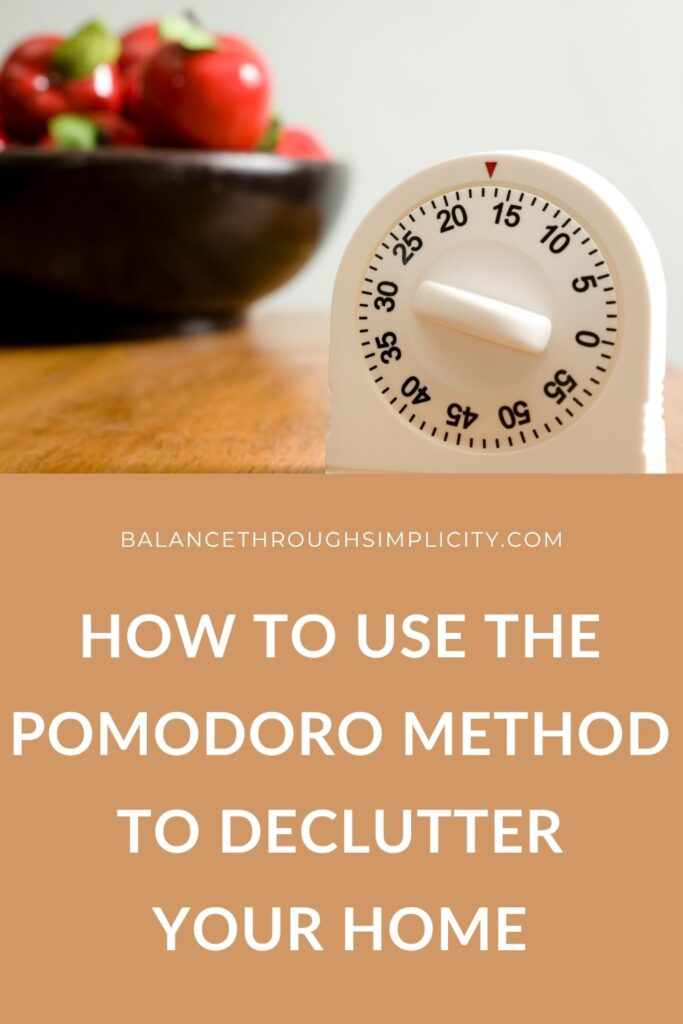
What If You Only Have 10 Minutes to Declutter?
You don’t have to follow the traditional 25-minute Pomodoro interval for decluttering to be useful.
If you’re short on time, tired or struggling to get started, try a shorter version.
Set your timer for 10 minutes and choose one small task, such as clearing the kitchen table, sorting the shoes by the front door or putting away the items on your bedside table.
Work on that task until your timer goes off, then stop and take a break if you need one.
You could also use five minutes to clear a particularly small area, such as a bathroom shelf or the top of a chest of drawers.
Short sessions are especially useful when you want to build a regular decluttering habit without adding another big job to your day.
The key is to choose a task that matches the time you have available. You may be surprised by what you can achieve when you give one small area your full attention.
Tips for Making the Pomodoro Method Work for You
Once you’ve tried the method a few times, you can adapt it to suit your home, your schedule and your energy levels.
Here are a few ways to make it easier to stick with.
1. Start Smaller Than You Think You Need To
It’s easy to underestimate how long decluttering can take, especially when you have a lot of belongings or an area that hasn’t been sorted for a while.
Rather than planning to finish a whole room, choose a task that feels almost too small.
You can always do more if you have the time and energy. Starting small helps you build confidence without creating an unrealistic expectation of what you should achieve.
2. Keep Your Decluttering Supplies Simple
You don’t need to buy lots of storage containers or special organising equipment before you begin.
A timer and a few bags or boxes for items you’re letting go of are usually enough.
If you decide to use separate containers for donations, recycling and things that belong elsewhere, keep them close by so you don’t waste time searching for them.
Try to declutter before buying storage solutions. Once you know what you’re keeping, it’s much easier to decide whether you actually need anything to organise it.
3. Avoid Switching Between Tasks
When you notice other things that need doing, it can be tempting to abandon your original task and move on to something else.
For example, you might begin sorting a kitchen drawer, notice that the worktops need cleaning and then start wiping them down.
Before long, you’ve moved on to several jobs without finishing any of them.
Instead, make a note of other tasks that come to mind and return to them later. Staying focused on one area helps you make more visible progress.
4. Don’t Empty Everything Out at Once
Taking everything out of a cupboard or wardrobe can make it easier to see what you own, but it can also leave you with a much bigger job than you intended.
If you only have 25 minutes, work through a manageable section instead.
You can sort one shelf, one drawer or one category of belongings without turning the whole room upside down.
This is particularly helpful if you might need to stop partway through. You want your decluttering sessions to leave your home more manageable, not create a bigger mess to deal with later.
5. Adapt the Timer to Your Energy Levels
Some days you’ll have the energy to work for 25 minutes. On other days, even 10 minutes might feel like a lot.
That’s fine.
Try a shorter interval, take longer breaks or complete just one session. If you’re feeling particularly tired or overwhelmed, choose a straightforward task that doesn’t involve lots of difficult decisions.
You don’t need to push yourself to meet a timer simply because it’s part of the technique.
The method is supposed to support you, not become another thing you feel you have to get right.
6. Stop When You Need To
The timer is a useful boundary, but it isn’t a rule you have to follow rigidly.
If you finish your task before the timer goes off, you can stop early. If you’re feeling exhausted or frustrated, you can pause rather than forcing yourself to continue.
Equally, if you’ve reached a natural stopping point and have the time and energy to finish a small remaining task, you can choose to do so.
Use the timer as a guide to help you manage your time and attention, rather than a measure of how productive you are.
7. Make It Part of Your Routine
You might find it helpful to schedule a short decluttering session into your week.
For example, you could spend 15 minutes decluttering after breakfast on a Saturday, tackle one drawer during a quiet weekday evening or use a 25-minute session before your usual weekend cleaning.
You don’t have to declutter every day. Start with a decluttering routine and frequency that feels realistic and build from there if it suits you.
A little regular attention can help prevent clutter from building up again, particularly in the areas of your home that tend to collect things.
Common Mistakes to Avoid When Using the Pomodoro Method to Declutter
The Pomodoro method is simple, but a few common mistakes can make it less effective.
Trying to do too much in one session. Choosing an entire room or a large storage area can leave you feeling as though you’ve made little progress. Break the task down into smaller sections instead.
Getting distracted by other jobs. Resist the urge to switch to cleaning, organising or another household task. Make a note of anything else that needs doing and come back to it later.
Spending too long making difficult decisions. If an item is causing you to hesitate, put it aside temporarily and move on to something easier. You can return to it when you have more time.
Focusing on speed rather than thoughtful decisions. Decluttering isn’t a race. You don’t need to get rid of as much as possible in 25 minutes. The aim is to make considered decisions about what you need and want to keep.
Leaving unwanted items in piles. Remember to plan a little time to remove donations, recycling and rubbish. Otherwise, you may simply move the clutter from one place to another.
Expecting every session to be productive. Some areas will take longer than others, and some days you’ll have more energy than others. Consistency matters more than having a perfect session every time.
Frequently Asked Questions About the Pomodoro Method for Decluttering
How long should I declutter for using the Pomodoro method?
The traditional Pomodoro method uses 25 minutes of focused work followed by a five-minute break. For decluttering, this is a useful starting point, but you can adapt it to suit your needs.
If you’re new to decluttering or feeling overwhelmed, try 10 minutes instead. The best session length is one that helps you get started and make progress without leaving you feeling exhausted.
Can I declutter my whole house using the Pomodoro method?
Yes, you can use the Pomodoro method to work through your entire home over time.
Rather than trying to finish everything in one day, divide your home into rooms and smaller areas. Work through them one session at a time, starting with the spaces that would make the biggest difference to your everyday life.
You may need several sessions for a single room, particularly if it contains a lot of belongings. That’s perfectly normal.
Is 25 minutes enough time to declutter a room?
Usually, 25 minutes won’t be enough to declutter an entire room, especially if it has accumulated a lot of belongings.
However, it’s often enough to make a noticeable difference to one part of the room. You might clear a surface, sort a drawer or declutter one shelf.
Think of each session as one small step towards a calmer, more manageable home.
What should I do if I don’t finish a task before the timer goes off?
Stop at a sensible point and take your break. You can continue the task in your next session if you have the time and energy.
If you’re in the middle of sorting something that needs to be dealt with safely, such as paperwork or household products, make sure it’s left in a secure and manageable state before you stop.
Remember, you don’t have to finish everything in one sitting for the session to be worthwhile.
Should I clean while I’m decluttering?
It’s generally easier to concentrate on one task at a time, so try to separate decluttering from cleaning.
First, decide what you want to keep and remove the items you no longer need. You can then clean the newly cleared surface or area.
If you combine too many jobs in one session, you may find yourself moving between tasks without making as much progress as you’d hoped.
What if I find decluttering emotionally difficult?
It’s normal to have mixed feelings about letting go of belongings. Some items have sentimental value, while others represent money spent, past interests or plans that never quite happened.
If you find yourself struggling, choose an easier area to work on first. You don’t have to begin with sentimental belongings or make every difficult decision at once.
Give yourself permission to pause and return to the task another time. The purpose of decluttering is to make your home work better for you, not to force yourself through an uncomfortable experience as quickly as possible.
CONCLUSION
Decluttering your home doesn’t have to mean giving up an entire weekend or spending hours sorting through everything you own.
The Pomodoro method offers a simple way to break the job into smaller, more manageable steps. By choosing one area, setting a timer and focusing on the task in front of you, you can make steady progress without feeling that you have to do everything at once.
Start with just one session. Clear a drawer, sort a shelf or tackle the clutter that’s been bothering you most.
Then take a break, notice what you’ve achieved and decide whether you’d like to do another session.
You don’t need to declutter your whole home today. You just need to take the next small step towards creating a home that feels calmer, more organised and easier to live in.
And remember, progress doesn’t have to be perfect to make a difference.
GET A FREE WORKSHEET
In this article we’ve looked at how you can declutter in blocks of 25 minutes or less. But, what if you’ve only got a few minutes to spare? Well, you can declutter in small pockets of time, even 5 minutes or less, using this free Declutter Checklist. Pop your details in the box below and I’ll send your copy to your inbox so you can start decluttering today!
READ THESE NEXT
Here are some more articles which you might find helpful to read next:
- The One-Hour Cleaning Method: How to Clean Your Home When You’re Short on Time
- What Should Your Home Really Look Like? 5 Questions to Help You Create a Home That Works for You
- How to Declutter Any Room in Your Home: A Simple Step-by-Step Guide
- How to Declutter When You Don’t Have Time to Declutter
- The Move Out Method: Declutter Your Home Like You’re Moving Tomorrow