Decluttering Methods and Strategies to Help You Clear Clutter More Easily
Looking for a decluttering method that actually works for you? From quick, two-minute tasks to more structured approaches that help you tackle an entire home, there are lots of different decluttering methods and strategies to choose from. This guide explains how they work, when to use them and how to get started, so you can find an approach that suits your time, energy and home.
Finding a Decluttering Method That Works for You
If you’ve ever looked around your home, decided that something needs to change and then felt completely overwhelmed about where to begin, you’re not alone. Decluttering can seem like a huge job, particularly when you have years of belongings to sort through, a busy schedule and plenty of other things competing for your attention.
The good news is that there isn’t just one way to declutter. Some methods help you make quick decisions and build momentum, whilst others encourage you to work slowly, focus on one area at a time or rethink your relationship with the things you own.
I’ve found that having a simple process to follow can make decluttering feel much more manageable. Rather than trying to tackle everything at once, you can choose an approach that fits your circumstances and work through your belongings in smaller, more achievable steps.
You don’t need to follow every method or find the perfect system before you begin. Think of this guide as a collection of ideas to help you get started, find your motivation and discover what works best for you.
Quick and Easy Decluttering Methods
These methods are useful when you want to make progress in a short amount of time, build momentum or fit decluttering around an already busy day.
The Two-Minute Decluttering Rule
The Two-Minute Decluttering Rule is a simple way to deal with small tasks before they have a chance to become bigger jobs. The idea is to look for things you can declutter, put away or deal with in around two minutes, rather than leaving them for another day.
You might clear a small pile of paperwork, put away items left on the kitchen worktop or remove a few things from a cluttered drawer. These tasks might seem insignificant on their own, but small actions can add up over time and help prevent clutter from accumulating.
This method is particularly helpful if you’re short on time, struggle to get started or find large decluttering projects overwhelming.
Read more: The 2-Minute Decluttering Rule
The Pomodoro Method for Decluttering
The Pomodoro Method uses short, focused periods of work followed by breaks. Instead of committing to hours of decluttering, you set a timer, concentrate on one task and stop for a break when the time is up.
You could use a 25-minute session to sort a kitchen cupboard, clear a wardrobe shelf or work through a box of belongings. If 25 minutes feels too long, start with a shorter session that feels manageable.
I particularly like the idea of using a timer to give a task a clear beginning and end. It can help you focus on what you’re doing now, rather than worrying about everything else that still needs attention.
Read more: How to Use the Pomodoro Method to Declutter Your Home
The 12-12-12 Decluttering Method
The 12-12-12 method gives you three simple targets to work towards: find 12 items to throw away or dispose of appropriately, 12 items to donate and 12 items to return to their proper homes.
It’s a useful way to turn decluttering into a short, achievable activity rather than an overwhelming project. You can try it in one room, focus on a particular category of belongings or involve other members of your household.
The numbers give you a clear goal, which can be especially helpful when you’re not sure where to start. If 36 items feels too much, you can always reduce the numbers and work at your own pace.
Read more: How to Use the 12-12-12 Rule to Declutter Your Home
The Snowball Decluttering Method
The Snowball Decluttering Method is about building momentum by starting small and allowing your progress to grow. You begin with a manageable task, such as clearing a drawer or one small surface, then move on to another task once you’ve finished.
Each completed task gives you a sense of achievement and helps you see that progress is possible. As you gain confidence, you can gradually take on larger areas or more challenging categories of belongings.
This approach is helpful if you’re feeling stuck or overwhelmed by the scale of the job ahead. You don’t need to wait until you have a whole weekend free; you can start with one small win and build from there.
Read more: The Snowball Decluttering Method To Help Clear Your Clutter
The 20/20 Decluttering Rule
The 20/20 rule can help when you’re holding on to things because you might need them someday. The idea is to consider whether an item could be replaced for around £/$20 or less and within about 20 minutes if you genuinely needed it again.
If the answer is yes, you might feel more comfortable letting it go rather than keeping it indefinitely just in case.
This is a decision-making prompt rather than a strict rule. It won’t be suitable for everything, and replacement costs and availability vary. It’s also important to consider environmental impact, sentimental value and whether you could borrow or reuse something instead of buying it again.
Read more: The 20/20 Decluttering Rule: 8 Simple Ways to Use It
Decluttering Methods to Change Your Perspective
Sometimes the hardest part of decluttering isn’t finding the time. It’s changing the way you think about your belongings and making decisions about what deserves a place in your home.
The Move Out Method
The Move Out Method encourages you to imagine that you’re moving house and ask yourself whether you’d choose to pack an item and take it with you to your new home.
It’s a useful way to look at familiar belongings with fresh eyes. Instead of automatically keeping something because it’s been in the same cupboard for years, you consider whether it’s genuinely useful, meaningful or worth the effort of moving.
You don’t need to be planning an actual house move to use this approach. Try it with your wardrobe, kitchen cupboards or storage boxes, and see which items you’d happily leave behind.
Read more: The Move Out Method: Declutter Your Home Like You’re Moving Tomorrow
Reverse Decluttering
Reverse decluttering offers a different way to approach the things you own. Instead of starting by deciding what to get rid of, you begin by identifying the belongings you actively use, need or want to keep.
This can be helpful if you find yourself hesitating over every item or worrying that you might make the wrong decision. It allows you to start with the things you’re sure about before looking more carefully at what’s left.
You can work through a drawer, cupboard or room, setting aside your definite keepers and then reviewing the remaining belongings. The method gives you a different starting point when traditional decluttering feels difficult.
Read more: How Reverse Decluttering Can Help You Get Rid of Stuff More Easily
Swedish Death Cleaning
Swedish death cleaning, inspired by the Swedish concept of döstädning, involves gradually sorting through your belongings and considering what you really need or want to leave behind.
Although the name can sound daunting, the idea isn’t intended to frighten you or make you feel that you must get rid of everything. It’s about being thoughtful about what you own, reducing unnecessary belongings and making things more manageable for yourself and, eventually, your loved ones.
You can apply the approach at any stage of life. Start with practical items such as unused household goods, duplicate belongings or things that no longer serve a purpose, and leave more emotionally difficult decisions until you’re ready.
Read more: Swedish Death Cleaning – What It Is and How to Use This Simple Decluttering Method
The Container Concept
The Container Concept is based on the idea that your available space helps determine how much you can reasonably keep. A drawer, cupboard, wardrobe or storage box has a natural limit, and the belongings you keep need to fit within that space.
Rather than continually adding more storage to accommodate everything, you decide how much space you’re willing to give a particular category of items. When that space is full, you review what you own and decide which belongings deserve to stay.
This can be especially useful for books, clothes, toys, craft supplies and sentimental items. It gives you a practical boundary without requiring you to aim for a particular number of possessions.
Read more: How To Use The Container Concept To Tackle Your Clutter
The 1% Rule
The 1% Rule is a gentle approach to making small amounts of progress rather than expecting dramatic results overnight. Instead of trying to transform your entire home in one session, you focus on making a small improvement at a time.
You might clear one shelf, remove a handful of unwanted items or spend a few minutes dealing with a clutter hotspot. Repeated consistently, these small actions can help you make progress without needing large blocks of free time.
This approach can be particularly helpful if you tend to put off decluttering because the overall task feels too big. You don’t have to do everything today; you just need a manageable place to begin.
Read more: The 1% Rule: A Simple Way to Keep Your Home Clutter-Free
Decluttering Methods for a Slower, More Manageable Approach
Not everyone wants to declutter quickly, and not every home or situation lends itself to a big clear-out. These approaches allow you to work at a gentler pace and make decisions without rushing.
Slow Decluttering
Slow decluttering is about taking your time and making steady progress rather than trying to clear your home in a weekend.
You might work on one small area each day, tackle a single category of belongings each week or set aside regular short sessions to work through your home gradually.
This approach is particularly useful if you’re busy, tired, emotionally attached to your belongings or easily overwhelmed by large projects. It gives you room to think about your decisions and build habits that fit into everyday life.
Read more: Don’t Have the Time or Energy to Declutter? Try Slow Decluttering
Decluttering Your Home in 30 Days
A 30-day decluttering challenge gives you a structured way to spread the work across a month. Rather than deciding what to do each day, you follow a series of smaller tasks that gradually help you work through different areas of your home.
You might focus on a kitchen drawer one day, your bathroom cupboard another day and a section of your wardrobe later in the week. Breaking the work into daily steps makes the overall project feel more achievable.
A month-long plan can be useful if you enjoy having a clear schedule and want to see steady progress. You can also adapt the pace to suit your circumstances rather than feeling you must complete every task on time.
Read more: How to Declutter Your Home in 30 Days
Decluttering Your Home Over a Year
If the idea of decluttering your entire home in a month feels unrealistic, a longer-term approach may suit you better. A year-long plan allows you to break the process into many small tasks, giving you time to work through different rooms, categories and storage areas.
You can tackle one small project at a time and revisit areas when necessary. This is a helpful option if you have a busy household, limited energy or a lot of belongings to sort through.
The aim isn’t to create a rigid schedule that becomes another source of pressure. It’s to make decluttering a manageable part of everyday life, with progress that builds over time.
Read more: 365 Ways to Declutter Your Home in 365 Days
How to Choose the Right Decluttering Method for You
With so many different decluttering methods available, it can be tempting to try several at once or spend ages researching which one is best. But you don’t need to find the perfect method before you begin.
Think about what you need most right now.
- If you’re short on time: Try the Two-Minute Rule or Pomodoro Method.
- If you need motivation: The 12-12-12 or Snowball Method can give you a clear starting point.
- If you’re struggling to let go: Try the Move Out Method or Container Concept to help you rethink what you keep.
- If you feel overwhelmed: Slow decluttering or a longer-term plan may be more manageable.
- If you want to rethink your belongings: Reverse decluttering or Swedish death cleaning may offer a useful new perspective.
You can also combine methods. For example, you might use the Pomodoro Method to focus on a small area, apply the Container Concept to decide how much to keep and then use the Snowball Method to build momentum over several sessions.
I’ve found that having a simple plan can make a difference, but I also think it’s important not to turn decluttering into another thing you have to get right. A method should support you, not make you feel that you’re failing if you don’t follow every step perfectly. If one approach doesn’t suit you, try another or adapt it to fit your life.
The best decluttering method is the one that helps you make progress in a way that feels realistic and sustainable.
Over to You
Decluttering doesn’t have to mean spending an entire weekend clearing out your home or making difficult decisions about every single possession. Sometimes a few minutes, a clear question or a simple plan is enough to help you get started.
Use this guide to explore the different decluttering methods and strategies, and return whenever you need a fresh idea. I’ll continue adding to the collection as new guides become available, so you can find an approach that suits whatever stage of decluttering you’re at.
I’d love to hear from you! Have you tried any of these decluttering methods, or is there another approach that has helped you make progress? Share your experiences in the comments below. Your ideas might help someone else find the confidence to begin.
Ready for a Little More Help with Decluttering?
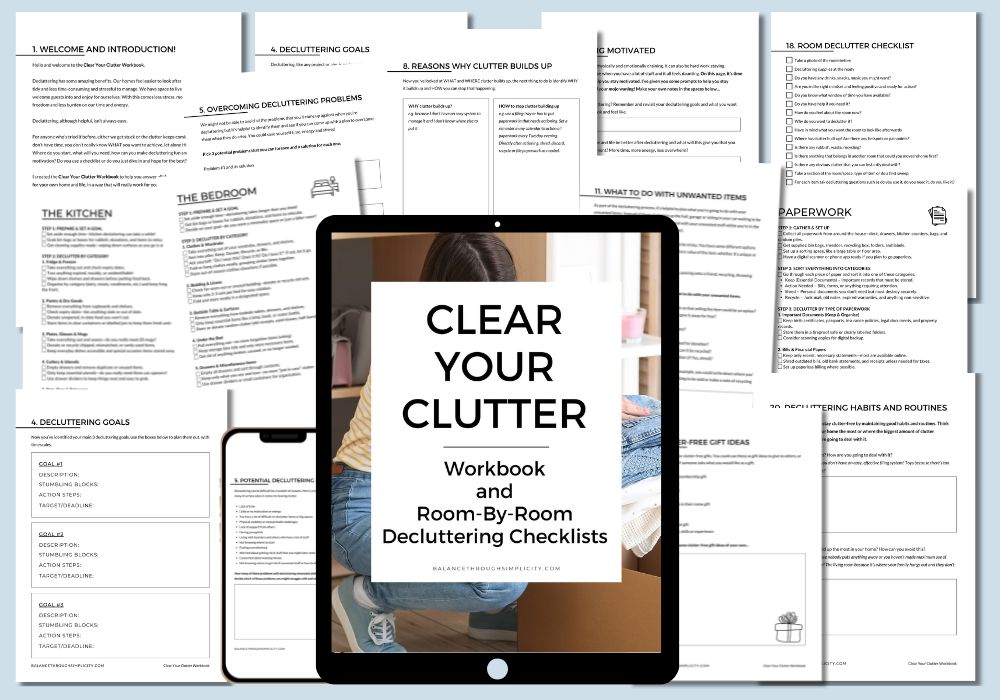
Finding a decluttering method that suits you is a great place to start. But if you’re still wondering what to declutter first, how to make decisions about your belongings or how to keep going when things feel overwhelming, my Clear Your Clutter Workbook can help.
This practical, 84-page workbook gives you a step-by-step plan to declutter your home at your own pace. It includes guidance to help you decide what to focus on, work through common decluttering challenges and make steady progress, along with bonus room-by-room checklists to help you get started.
You don’t need to tackle your whole home at once or aim for a perfectly minimalist space. Just take it one step at a time and work towards a home that feels calmer, clearer and easier to manage.
Learn more about the Clear Your Clutter Workbook.