
11 Simple Ways to Declutter a Small Home When Space Is Tight
Struggling with limited space? Here are 11 simple ways to declutter a small home. From using vertical storage and multi-functional furniture to creating zones and rotating decorations, these strategies help you create a calm, clutter-free space even if it’s not very big!
WHY DECLUTTERING IS MORE DIFFICULT IF YOUR HOME IS REALLY SMALL
If you live in a small home, you’ll probably know that clutter can feel louder, more stressful and harder to ignore. There’s less room for things to hide, which means everyday items are often on show—and that can make even a small amount of clutter feel overwhelming.
It can also make decluttering feel more difficult especially if you already feel overwhelmed by where to start. You might not have the space to move things around, sort piles easily, or store items “just for now” while you decide what to keep. Everything has to work that little bit harder to earn its place.
At the same time, a small home doesn’t have to be completely clutter-free to feel good. You might still want it to feel cosy, lived-in and personal—just without the sense of heaviness or overcrowding. Often, it’s about finding that balance between comfort and space, keeping things light and airy while still making your home your own.
The good news is that the benefits of decluttering a small home can be even greater. When you learn how to declutter a small home in a way that suits your space, even small changes can have a big impact.
It might take a bit of patience to find what works for you, especially if space is limited—but it’s well worth it.
11 SIMPLE WAYS TO DECLUTTER A SMALL HOME
I was helping a friend declutter her small home recently and it really highlighted how different the process can feel when space is limited. We had to be more intentional with every item and more creative with how we used the space.
In this article, I’d like to share some tips we used and which may help you too.
Here are some simple, practical ways to help you make the most of your space and gently streamline your belongings.
If you’re not sure where to begin, start with one small, visible area—like a surface, a drawer or a corner of a room—and build from there.
1. Maximise Vertical Space
When floor space is limited, your walls can become one of your most useful storage tools.
Using vertical space helps free up surfaces, reduces visual clutter and makes a room feel more open and breathable. Shelves, hooks and wall-mounted storage can make the whole room feel less crowded.
Try this:
- Add one shelf in a cluttered area
- Use hooks for items you reach for daily
- Look for ways to store upwards, not outwards
2. Embrace Multi-Functional Furniture
In a small home, it helps if each item earns its place. Furniture that doubles up—like storage ottomans or beds with drawers—can reduce the need for extra pieces.
When everything has to work a bit harder, choosing multi-functional items can simplify your space without making it feel sparse. It’s about being intentional, rather than minimal for the sake of it.
Try this:
- Swap one item for a dual-purpose version
- Choose furniture with hidden storage
- Keep surfaces clearer by storing things inside
3. Streamline Your Wardrobe
A smaller wardrobe can be a quiet relief. Fewer clothes often means fewer decisions and less visual clutter.
In a small home, clothing can quickly take over if you’re not careful. Keeping only what you wear and enjoy helps your space feel lighter, while also making your daily routine easier.
Try this:
- Let go of what you didn’t wear this season
- Store out-of-season items elsewhere
- Keep what fits your life (and body!) right now
4. Digitise Your Belongings
Some things take up space without needing to. Papers, photos and even books can often be stored digitally instead.
This can be especially helpful when you don’t have much storage to begin with. It allows you to keep what matters, without everything needing a physical place in your home.
Try this:
- Scan important documents
- Store photos digitally
- Keep a small selection of meaningful originals
5. Create Zones
Even in a small space, it helps if each area has a purpose. A corner for working, a spot for relaxing—it doesn’t have to be perfect, just intentional.
When everything is visible, having clear zones can stop your home from feeling muddled. It brings a sense of order, even if the space itself is limited.
Try this:
- Give each space a main purpose
- Use simple visual cues like lighting or rugs to designate the different zones
- Avoid overlapping too many functions as this can be confusing to the eye and brain
6. Use Under-Bed Storage
The space under your bed is easy to overlook, but it can be really useful. It’s ideal for things you don’t need every day but still want to keep.
Making use of hidden storage like this helps keep your main living areas clearer, which is especially important when everything else is on show.
Try this:
- Store seasonal or occasional items
- Use containers to keep it organised
- Avoid letting it become a dumping ground for hidden clutter
7. Rotate Decorations
You don’t need everything on display all the time. Rotating decorative items can help your space feel calmer and more intentional.
This is a simple way to keep your home feeling cosy without it becoming overcrowded. A little less on show often makes a space feel more open and restful.
Try this:
- Keep a small, curated selection out
- Store the rest neatly
- Change things with the seasons if you like
8. Keep What You Truly Use and Love
In a small home, every item has more presence, which is why decluttering a small home often comes down to being more selective about what you keep.
When everything has to earn its place, it becomes easier to let go of what no longer fits your life. That shift can make your home feel lighter, without losing its warmth.
Try this:
- Let go of items without guilt
- Keep what’s useful or meaningful
- Make space for what matters most
9. Make the Most of Your Storage Spaces
Cupboards and wardrobes can often hold more than we think, with a bit of structure. Simple organisers can help you use the space more effectively.
In a smaller home, good organisation makes a big difference. It helps you see what you have, use it more easily and avoid unnecessary duplicates.
Try this:
- Group similar items together
- Add simple dividers or baskets
- Make things easy to see and reach
10. Build a Small Daily Habit
In a small home, little resets go a long way. A few minutes each day can stop things from building up.
Because clutter is more visible, it’s often easier to stay on top of it with small, regular habits rather than occasional big clear-outs.
Try this:
- Do a quick 5-minute reset in the evening
- Put things back as you go
- Focus on one small area at a time
11. Look for Hidden Opportunities
Sometimes it’s not about having more space but using what you already have differently. Small shifts can make a surprising difference.
When space is limited, a bit of creativity can go a long way. Often, it’s about rethinking what you already have rather than adding more.
Try this:
- Notice unused spaces that you can put to good use
- Rethink where and how things are stored
- Keep solutions practical and simple – don’t worry about what looks good or is trendy right now
Bonus Tip!
One important thing to keep in mind when decluttering a small home. Don’t fall into the trap of organising instead of decluttering! Organising your stuff means you have the same amount of stuff but probably with more containers and storage solutions. So, always declutter before you organise.
CONCLUSION
Decluttering a small home can take a little more thought and patience, especially when space is limited. But the impact of even small changes can be surprisingly powerful.
When your home feels lighter and easier to manage, it doesn’t just change your space—it can change how you feel in it too.
Start small, keep it simple, and focus on what matters most to you—because decluttering a small home isn’t about having less, it’s about making your space work better for you.
And over to you… What’s one small change you could make today to create a bit more space?
If you’d like a bit more support, you might find these helpful:
- How to Declutter Your Home Without Feeling Overwhelmed
- Why Decluttering Feels So Hard (And What Helps)
- How to Create a Calm and Clutter-Free Home
- Decluttering Tips for When You Have No Time
- How Often Should You Declutter? Finding a Routine That Works for You
And if you’d like more structured support, my Clear Your Clutter Workbook walks you through the process in a calm, realistic way, helping you simplify your home at your own pace. Click here to learn more about Clear Your Clutter.
GRAB YOUR FREE CHECKLIST
If it helps, start with something simple. A checklist can make the process feel more manageable and give you a clear place to begin. You can download my Declutter Any Room in Your Home Checklist for step-by-step guidance and ideas to get started.
Just pop your details in the box below…
Hi Laura, good luck with the moving and I’m so pleased my timely article might help a little!
Hi Nancy, how interesting, thank you for sharing how you’ve been able to adapt and creatively use your space and furniture choices in a small area.
Thank you Antonia for this article, it is true that in small spaces, the impact of decluttering is more visible.
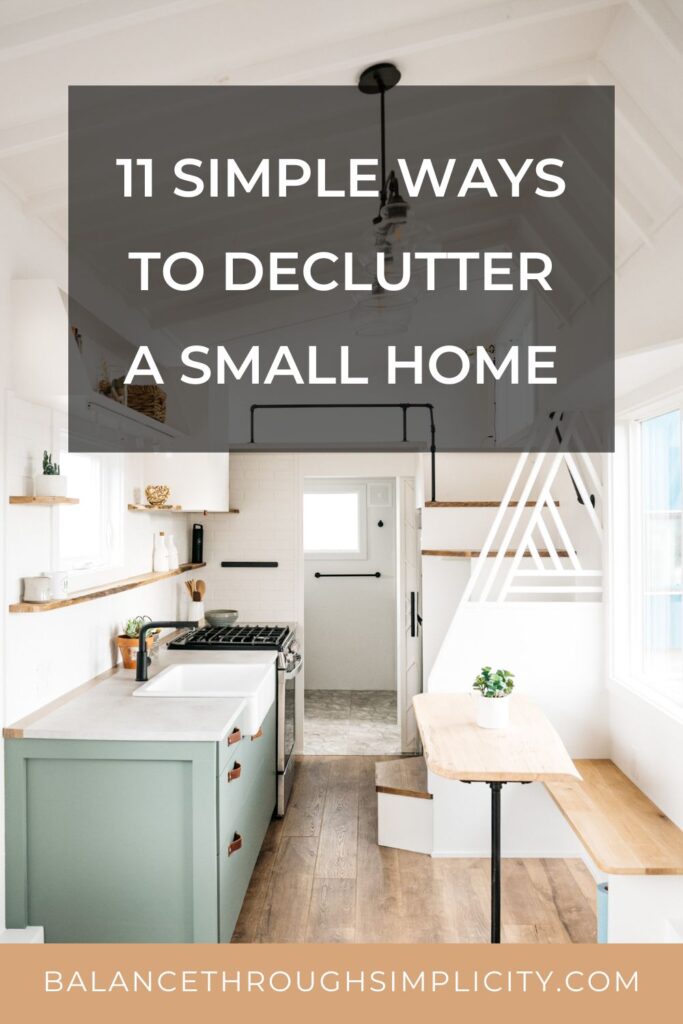
At our current home, we don’t have upper kitchen cabinets (there’s a big window that lets lots of light in). Therefore, our dining area has a sitting space just like in the first picture and there is storage under our seats where we keep tools, cleaning supplies and much more. In our backs we have canned food and silverware. This piece of furniture is a life saver!
Nancy
This article is perfectly timed for me, Antonia. The movers will be bringing my things to my new flat in the next few days (no specific date yet), and I *know* I will have way too much stuff, as my new flat is wonderfully modern, but less wonderfully quite small, in keeping with typical new North American builds. I’m going to use every recommendation in here! Thanks for a very helpful article.