
7 Worst Places to Start Decluttering (And Where to Begin Instead)
The worst places to start decluttering are often the biggest, most emotional and most overwhelming areas of your home. If you’ve ever started with the loft, garage or a room full of sentimental items and quickly lost motivation, your starting point may be the problem. Here’s where not to begin—and what to declutter instead for faster, easier progress.
DO YOU FIND DECLUTTERING DIFFICULT?
Have you ever started decluttering and given up after 20 minutes?
You spot a room that’s driving you mad.
Maybe it’s the garage that’s overflowing with boxes, the loft full of years of memories, or the wardrobe packed with clothes that no longer fit.
You decide that enough is enough and that today is the day you’re finally going to sort it out.
Fast forward an hour and you’re sitting on the floor surrounded by piles of stuff, feeling overwhelmed, exhausted and wondering why decluttering always seems so difficult.
If that sounds familiar, you’re not alone.
One of the biggest mistakes I see people make when decluttering is starting in the wrong place.
It’s understandable. We naturally want to tackle the biggest problem first. We think that if we can conquer the most cluttered space, everything else will feel easier.
But in reality, the opposite is often true.
The best decluttering projects build momentum, confidence and decision-making skills. The worst ones drain your energy before you’ve even had a chance to experience success.
7 WORST PLACES TO START DECLUTTERING
Over the years, I’ve learned that where you start matters far more than most people realise. In fact, changing your starting point can completely transform how decluttering feels.
Here are seven of the worst places to start decluttering—and where to begin instead.
1. The Loft or Attic
The loft is often where years, sometimes decades, of possessions end up.
Old baby clothes, Christmas decorations, paperwork, keepsakes, furniture, forgotten hobbies and boxes labelled “just in case”.
The problem isn’t just the volume of stuff.
It’s that much of it carries memories, uncertainty or sentimental value.
Every item seems to require a decision.
Every box leads to another story.
What starts as a decluttering session can quickly become an emotional journey through your past.
Try this instead:
Choose an everyday area that affects your daily life.
- Clear a kitchen drawer
- Declutter your bedside table
- Sort one bathroom cupboard
You’ll gain a sense of achievement much more quickly and develop your decluttering muscles before tackling sentimental spaces.
2. The Garage
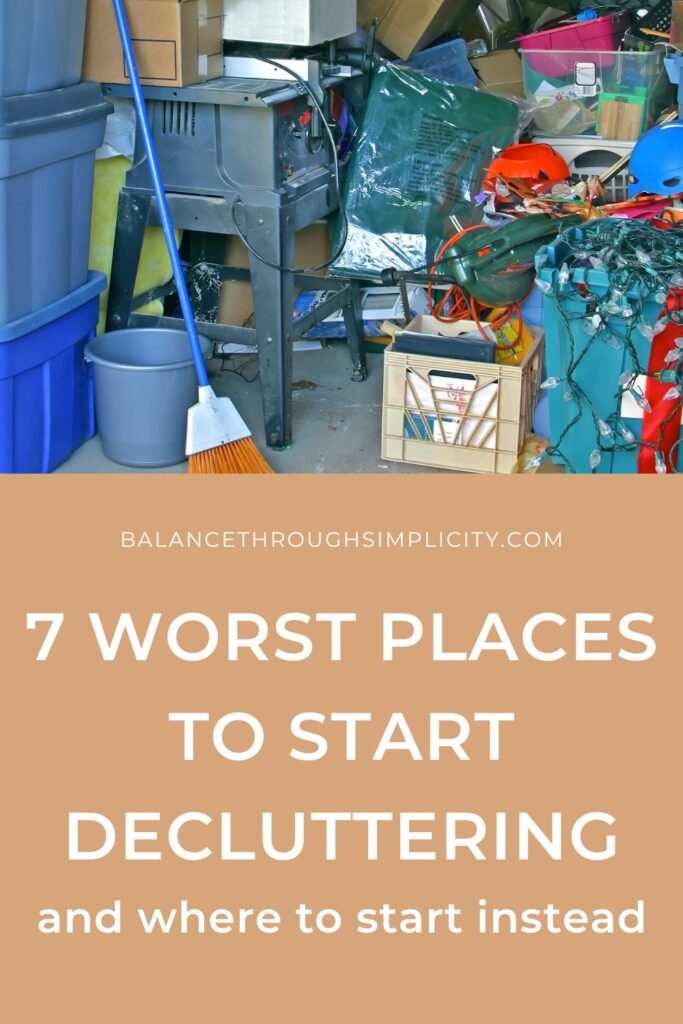
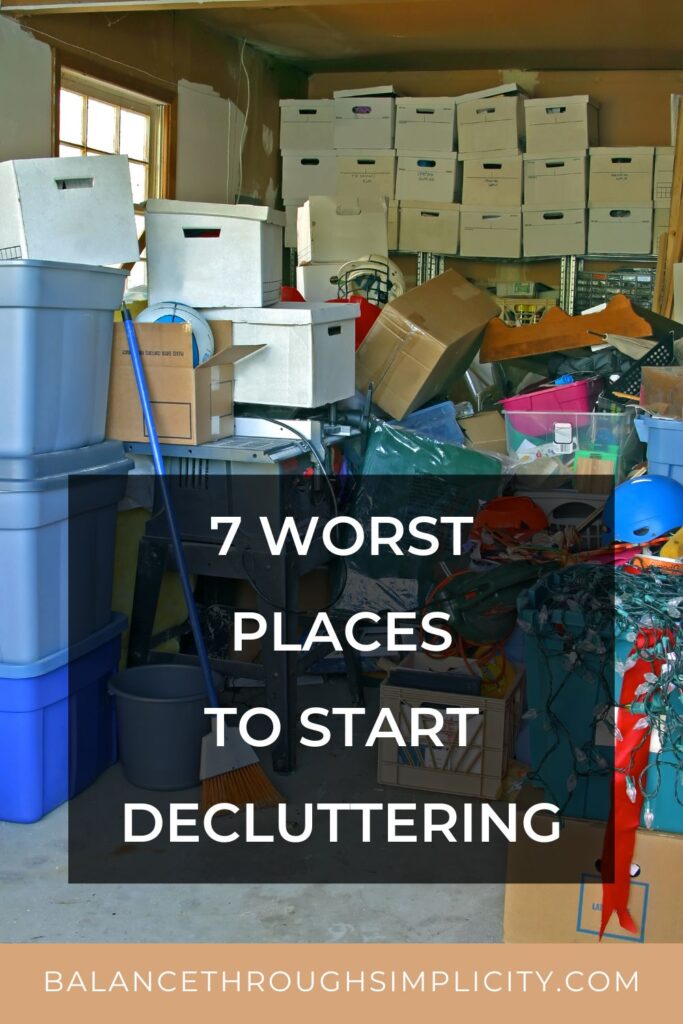
Garages often become holding zones for everything we don’t know what to do with.
Tools, sports equipment, paint tins, seasonal decorations, old furniture and mystery boxes all tend to gather there.
The challenge is that garages usually contain multiple categories of clutter mixed together.
Instead of making one decision, you’re making hundreds of different kinds of decisions.
That’s mentally exhausting.
I remember spending an entire Saturday trying to organise our garage years ago. By lunchtime I had created more mess than I’d started with and felt completely defeated.
The problem wasn’t the garage itself.
The problem was that it was simply too big and too complicated for a starting point.
Try this instead:
Pick one small category elsewhere in your home.
- Mugs
- Tea towels
- Makeup
- Cleaning supplies
Smaller categories allow you to practise decision-making without becoming overwhelmed.
3. Your Sentimental Keepsakes
Memory boxes, photographs, children’s artwork and inherited belongings are often some of the hardest things to declutter.
These items aren’t just possessions.
They’re tied to identity, memories, relationships and emotions.
When you’re new to decluttering, these decisions can feel impossible.
Many people assume that decluttering means getting rid of meaningful things. It doesn’t.
But until you’ve built confidence in your decision-making, sentimental clutter can stop you in your tracks.
Try this instead:
Start with items that carry very little emotional weight.
- Expired toiletries
- Duplicate kitchen gadgets
- Old stationery
Quick wins help build trust in yourself before you move on to more meaningful possessions.
4. The Spare Room
The spare room often becomes a dumping ground for unfinished decisions.
It’s where things go when we’re not sure whether to keep them, donate them, sell them or use them.
As a result, the room can contain a little bit of everything.
And that’s exactly what makes it difficult.
Your brain is constantly switching between categories, memories and decisions.
That creates decision fatigue very quickly.
Try this instead:
Focus on a single contained space.
- One shelf
- One drawer
- One cupboard
Limiting the scope helps you finish what you start and experience progress more quickly.
5. Your Entire Wardrobe
This one often surprises people.
Wardrobes can be wonderful decluttering projects—but not necessarily as your first project.
Clothing decisions can be surprisingly emotional.
We aren’t just deciding whether to keep a jumper.
We’re often deciding who we used to be, who we hope to become and whether we’re willing to let go of unrealistic expectations.
I’ve certainly held onto clothes for far longer than necessary because I thought I “might wear them someday”.
Many of us have.
Try this instead:
Start with one specific clothing category.
- Socks
- Pyjamas
- Scarves
- Bags and purses
Reducing the number of decisions makes the process much less intimidating.
6. Paperwork
Paper clutter looks deceptively simple.
After all, it’s just paper.
But paperwork often requires reading, sorting, filing, shredding and decision-making.
A single pile can contain bills, receipts, insurance documents, letters, warranties and paperwork that needs action.
It’s rarely as straightforward as people expect.
Try this instead:
Begin with obvious rubbish.
- Junk mail
- Old catalogues
- Expired leaflets
- Duplicate documents
Removing easy paper clutter first can make the bigger paperwork projects feel far more manageable later on.
7. The Room That Stresses You Most
This may be the most important one of all.
Many people believe they should start with the area they dislike the most.
- The room that makes them feel guilty
- The room they avoid looking at
- The room that feels completely out of control
The intention is understandable.
But starting with your biggest source of stress often creates even more stress.
Decluttering works best when you create positive momentum.
Success leads to motivation.
Motivation rarely appears first.
One of the biggest lessons I’ve learned is that decluttering isn’t about proving how much you can endure.
It’s about making steady, sustainable progress.
Try this instead:
Choose the easiest possible starting point.
Ask yourself:
“What area could I declutter in ten minutes and actually finish?”
Start there.
Small successes count.
In fact, they often count more than dramatic weekend clear-outs because they’re what help you keep going.
Why Starting Small Matters
When people struggle with decluttering, they often assume they lack motivation, discipline or willpower.
In my experience, that’s rarely the real issue.
More often, they’ve simply started with a task that was too big, too emotional or too overwhelming.
Starting small isn’t cheating.
It’s strategy.
Every drawer cleared, shelf organised and bag donated helps strengthen your confidence and decision-making skills.
Those small wins accumulate.
And before long, the spaces that once felt impossible become much more manageable.
CONCLUSION
If you’ve tried decluttering before and felt overwhelmed, don’t assume decluttering isn’t for you.
It may simply be that you started in one of the worst places to start decluttering.
Instead of tackling the biggest challenge first, give yourself permission to start small.
- Choose the easy drawer
- Clear the bathroom shelf
- Sort the kitchen cupboard
Build momentum before tackling big spaces like the loft, garage or sentimental belongings.
Because decluttering isn’t a race to see how much you can get rid of. It’s a process of creating a home that feels calmer, easier to manage and more supportive of the life you want to live.
If you’re looking for more help, you might also enjoy my articles on how to start decluttering when you’re overwhelmed, the best places to start decluttering for quick wins, and why decluttering feels so hard.
And over to you… Have you ever started decluttering in one of these places and regretted it? Or perhaps you’ve discovered a small, easy area that gave you the momentum to keep going? I’d love to hear about your experiences in the comments. Which space in your home feels the most overwhelming right now, and where are you planning to start instead? Your tips, challenges and successes might be exactly the encouragement someone else needs today.
Need a Little More Help?
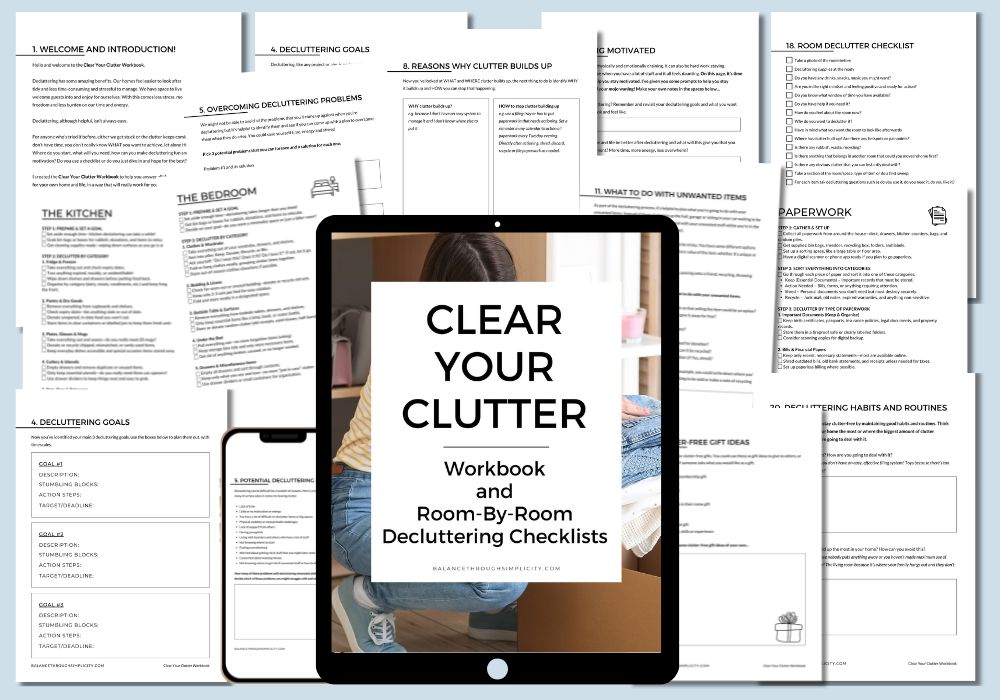
If you’d like some extra support as you declutter, my Clear Your Clutter Workbook walks you through the process step by step, with practical exercises, prompts and simple strategies to help you make steady progress without feeling overwhelmed. It’s designed to help you clear clutter at your own pace and create a home that feels calmer, lighter and easier to manage.
Learn more about the Clear Your Clutter Workbook.
Join the 7-Day Declutter Challenge
Ready to stop feeling overwhelmed and start making real progress? Join my free 7-Day Declutter Challenge and I’ll guide you through simple, manageable tasks that help you clear clutter one step at a time. It’s the perfect way to build momentum, create quick wins and enjoy a calmer, more organised home.
Hi Nancy, I’m glad you found the article helpful. I’ve found decluttering to be very much a case of trial and error!
Thank you so much! I’m glad the article is helpful to you.
“7 worst places to start de cluttering” is one of the best articles on the subject I have read in recent times
Hi Antonia, great article, very practical. I was surprised to read paperwork and wardrobe on this list. I declutter my wardrobe twice a year when the seasons change and find it very overwhelming. I can understand why now.
This weekend I finally tackled my linen shelf, I had been postponing it for some weeks. I was surprised to find out it was not as difficult as I thought. It seems there is less attachment to bed sheets and towels than to our clothes.
Thank you!!
Nancy