

How Often Should You Declutter? Find a Routine You Can Actually Stick To
If you’ve ever wondered how often should you declutter, you’re not alone. The truth is, there’s no one-size-fits-all answer. The key is finding a simple, realistic routine that fits your life—so decluttering becomes something you keep up with, not something you keep putting off.
WHEN DO YOU NEED TO DECLUTTER?
Let’s start with the real question… When people ask how often should you declutter, what they’re often really asking is:
How do I stay on top of my home without feeling overwhelmed or constantly behind?
Some of us might prefer a home that looks minimal and simple but most of us declutter because of how our home FEELS not looks. We want a home that’s easy to manage and enjoyable to relax and unwind in.
And, as most of us also know, a clutter-free home has some wonderful benefits for our body, mind and general productivity but actually getting to that clutter-free state isn’t always easy!
That’s because decluttering isn’t just about having a tidy home once. It’s about maintaining it in a way that feels doable.
And that’s where a routine makes all the difference.
Pop your details in the box below and I’ll send you a free workbook to help you set up your own simple decluttering routines that work for you and your home…
WHY DECLUTTERING ACTUALLY MATTERS (MORE THAN WE THINK)
It’s easy to see decluttering as something optional. Something to do when you’ve got time, energy, or a sudden burst of motivation.
But clutter has a quiet way of building up—and weighing on you.
When your home feels cluttered, it can make everyday life feel harder than it needs to be. You spend more time looking for things, more energy managing your space, and often carry a low-level sense of stress without quite realising why.
Research has shown that clutter increases stress. It causes tension amongst different members of the home who might have different clutter thresholds (tolerances to clutter, if you like).
It not only affects how we use our space, but also how we feel about it. For example, if I want to sit at my kitchen table with my coffee and a book, I don’t want to be moving piles of paperwork or my kids arts and crafts before I can sit down.
And, as the one who does the majority of the housework and running of the home, I certainly don’t want to be reminded of what I need to do, clean and tidy every time I look around.
Each little bit of clutter sends out a signal and too many signals causes my brain to go into overdrive! I don’t mind the signal my indoor plants send to me reminding me to water them, but I don’t like the pile of filing sitting on my kitchen counter reminding me I’m behind on my filing and organising!
Decluttering helps create breathing room. It makes your home easier to manage, your routines smoother, and your environment calmer to be in.
WHY DECLUTTERING ISN’T A ONE-AND-DONE JOB
One of the biggest misconceptions about decluttering is that you do it once… and then you’re finished. If only.
It’s rarely a quick fix. You’ll probably have noticed this already when your freshly decluttered kitchen counter becomes the dumping ground for paperwork, school stuff and (in my house) the contents of my husband’s pockets when he comes in from work!
Not only is it frustrating when a newly cleared area of your home becomes cluttered but it also weighs on the mind as well as taking up your space.
The reality is that clutter is part of everyday life. Things come into your home constantly—shopping, post, gifts, paperwork, all the little bits that accumulate without much effort at all.
Which means decluttering isn’t a one-off task. It’s ongoing maintenance.
Not in a heavy, time-consuming way—but in a gentle, consistent way that keeps things from building up again.
When you shift your mindset from “big clear-out” to “regular reset”, everything starts to feel more manageable.
WHY IT HELPS TO MAKE DECLUTTERING PART OF YOUR ROUTINE
Let’s be honest—decluttering isn’t always the most exciting way to spend your time. It’s very easy to put it off. To tell yourself you’ll do it later. To choose something easier or more enjoyable instead. And that’s completely normal.
But this is exactly why decluttering works best when it becomes part of your regular routine, rather than something you rely on motivation for. When it’s just something you do—like brushing your teeth or putting the washing on—it requires less decision-making, less energy, and far less resistance.
It becomes familiar. Automatic, even. Decluttering becomes a habit. And that’s what keeps your home feeling under control in the long run.
So… how often should you declutter?
The most helpful answer is this: As often as you need to, to stop clutter building up again.
For some people, that means a little every day. For others, it might look like a weekly reset, or a more focused monthly clear-out. There’s no right or wrong approach—only what works for you.
Let’s look at what each option might feel like in real life.
1. Decluttering a little every day: gentle and manageable
Daily decluttering doesn’t mean spending hours tidying. It’s about small, almost unnoticed actions that keep things ticking along.
You might spend five or ten minutes clearing a surface, sorting through a drawer, or putting things back where they belong. You might get into the habit of dealing with things straight away—putting items away after using them, or removing things you no longer need as you come across them.
This approach works well if you prefer small, steady progress or if larger decluttering sessions tend to feel overwhelming.
Over time, these small moments add up. Your home stays calmer because clutter never gets the chance to build up in the first place.
Try this for your simple daily reset:
- Choose a consistent time in your day, such as after dinner or before bed, so it becomes part of your natural rhythm rather than something you have to remember.
- Set a timer for five or ten minutes to keep it manageable and avoid it feeling like a big task.
- Focus on just one small area at a time—a drawer, a surface, or your handbag—so it feels achievable even on busy days.
- Keep a small donation bag or box nearby so you can quickly remove anything you no longer need without overthinking it.
- Finish by resetting the space—putting things back where they belong—so you wake up or return to a calmer, clearer area.
2. A weekly reset: structured but flexible
A weekly rhythm offers a bit more structure without feeling too rigid.
You might set aside half an hour once a week—perhaps at the weekend or on a quieter evening—to focus on a specific area. One week it might be the kitchen, the next your wardrobe, then paperwork or a cluttered cupboard.
There’s something reassuring about knowing you have a regular time to reset your space. It takes the pressure off needing to do it constantly, while still keeping things under control.
This can be a lovely middle ground if daily decluttering feels like too much, but you still want to stay on top of things.
Try this for your weekly reset routine:
- Pick a regular day and time that fits your week (for example, Sunday morning or a quieter evening) so it becomes a familiar habit.
- Decide on one focus area each week, such as the kitchen, wardrobe or paperwork, rather than trying to tackle everything at once.
- Keep your session short and realistic—around 20–30 minutes is often enough to make a noticeable difference.
- Make it feel more enjoyable by pairing it with something comforting and fun, like a cup of coffee, music or a favourite podcast.
- Keep a running list of areas that need attention so you don’t have to decide on the spot what to declutter each week.
3. A monthly clear-out: deeper and more focused
If your weeks already feel full, a monthly declutter might feel more realistic.
This is where you set aside a longer block of time to focus on a bigger area or category. It’s less about quick wins and more about stepping back, reviewing what you have, and making more thoughtful decisions.
It can feel incredibly satisfying—like a proper reset, for both your home and your mind. At least, that’s how I feel after a good declutter!
The key here is to be realistic about your time and energy, and not try to tackle everything at once. One space, one category, one session is more than enough.
Try this to plan a monthly clear-out:
- Choose a specific day each month (for example, the first Saturday) and treat it as a gentle reset rather than a big, exhausting project.
- Focus on one category or space at a time, such as your wardrobe, bathroom cupboards or paperwork, to keep it manageable.
- Block out a realistic amount of time and include short breaks so you don’t burn out halfway through.
- Prepare in advance with empty bags or boxes for donations, recycling and rubbish so you can move things out quickly.
- Build in a simple next step, such as taking donations to a charity shop or arranging collection, so clutter doesn’t linger after you’ve decluttered.

FINDING A DECLUTTERING ROUTINE THAT FITS YOUR LIFE
Instead of trying to follow someone else’s ideal routine, it helps to look at your own life honestly.
Think about when you naturally have a bit of time or energy. Notice whether you prefer quick tasks or longer, focused sessions. Consider how busy your days feel and what you can realistically maintain.
You might find that a combination works best. A few minutes here and there during the week, with a slightly longer reset when you have the time.
This is actually what I do. Every evening I do a reset of my home, putting the clutter of the day away and getting things tidy and organised for the next day before I head up to bed. I feel it’s like closing one day and getting ready for a fresh new one. I do a quick declutter of any items I come across, including any paperwork from school or that’s come in the post.
Then, if I notice a drawer is too full and I can’t close it, or my filing tray needs sorting, or my daughter’s socks need sorting, I’ll write this on my To Do list for a weekend declutter when I have more time.
This usually works well in our home. This isn’t about creating the “perfect” routine. It’s about creating one that feels supportive and sustainable.
HOW TO GET STARTED (WITHOUT OVERTHINKING IT)
The easiest way to begin is to keep things very small. Choose one space, not a big complicated space as this is one of the worst places to start decluttering. Set a short amount of time. See what you can do.
As you go, pay attention to what feels manageable and what doesn’t. That feedback will help you shape your routine over time.
It doesn’t need to be complicated. It just needs to be consistent enough to make a difference.
WANT TO GET STARTED DECLUTTERING TODAY?
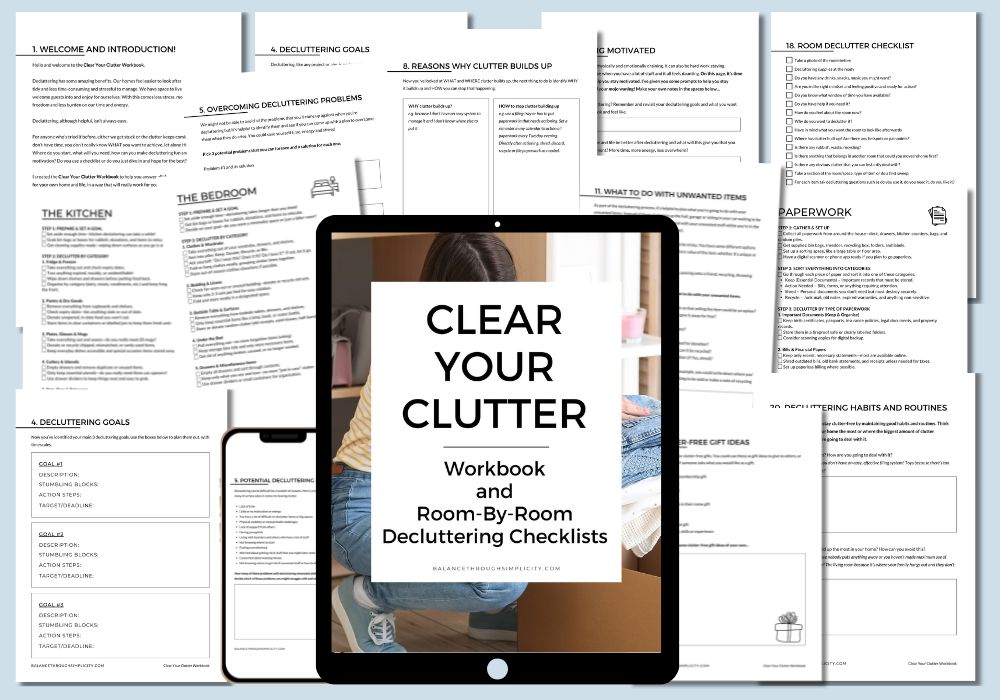
Sometimes it’s easier to get started if you have some kind of plan and structure. If this sounds like something you need, I’d love to help. Why not take a look at my Clear Your Clutter Workbook. It’s packed full of tips, ideas and checklists to help you declutter your home and build some habits and routines to stop clutter building back up.
Click here to learn more about Clear Your Clutter.
CONCLUSION
Decluttering isn’t about doing more or doing it perfectly. It’s about creating a home that feels easier to live in—and finding simple ways to keep it that way. Your routine doesn’t need to look impressive. It just needs to work for you.
So, how often should you declutter? Often enough that your home feels manageable… but not so often that it feels like a burden.
Whether that’s a few minutes a day, a weekly reset, or a monthly clear-out, the goal is the same: gentle, ongoing maintenance that supports your life. Start small. Keep it simple. Let your routine evolve as your life does.
And over to you… How often do you declutter at the moment? Do you find yourself doing a little and often, or saving it all for a bigger clear-out? Are you happy with your current routine, or does it feel like something you’re still trying to figure out?
I’d love to hear what works for you—and what doesn’t. Share in the comments and let’s learn from each other.
Here are some more articles on this topic which you might find helpful:
- Decluttering Habits: 20 Daily Habits for a Clutter-Free Home
- 8 Signs It Might Be Time to Declutter
- Living With A Hoarder: 12 Tips for When Clutter Causes Tension
GET YOUR FREE WORKBOOK
If you’ve enjoyed this article but would like some help creating your own simple decluttering routine, I have something to help you! Pop your details in the box below and I’ll send you a free workbook to help you create daily, weekly and monthly decluttering routines that work for you.