
10 Things We Decluttered to Make My Aunt’s Home Safer
When we think about decluttering, we often focus on having a tidier, calmer home. But helping my elderly aunt sort through her belongings showed me the importance of decluttering for safety and how everyday items can quietly become obstacles. Here are 10 things we prioritised removing to make her home safer, easier to manage, and more comfortable to live in.
WHY DECLUTTERING FOR SAFETY MATTERS
When people talk about decluttering, the conversation often focuses on creating more space, reducing stress, and making a home look tidier. Those are all wonderful benefits, and they’re certainly some of the reasons I continue to declutter my own home.
But a few years ago, I discovered another reason that is arguably even more important.
Safety.
I hadn’t really thought about clutter in those terms until I spent some time helping my elderly aunt sort through her home. Like many people, she had lived in the same house for decades. Over the years, possessions had gradually accumulated. Not because she was particularly messy or because she intentionally collected lots of things, but simply because life happened.
Furniture stayed where it had always been. Cupboards became fuller. Useful items were kept “just in case”. Gifts were received. Paperwork piled up. Little by little, the house became harder to manage.
What struck me wasn’t how much she owned. It was how many everyday items had quietly become obstacles.
A rug that curled slightly at the corner. Boxes stored near a doorway. Items that required stretching to reach. Furniture that made it difficult to move around comfortably. None of these things seemed particularly problematic on their own, but together they made everyday life more challenging.
As we worked through the house, I was once again reminded that decluttering isn’t always about creating a minimalist home or perfectly organised cupboards.
Sometimes it’s about preserving independence. Sometimes it’s about reducing frustration. Sometimes it’s about making everyday tasks easier. And sometimes it’s simply about creating a safer home.
WANT TO START DECLUTTERING RIGHT NOW?!
If reading this article makes you realise that your home could benefit from a little decluttering, don’t feel like you have to tackle everything at once.
My free Declutter Starter Kit will help you get started with practical tips, simple strategies, and easy first steps to create a calmer, more manageable home.
Pop your details in the box below.
DECLUTTERING FOR SAFETY ISN’T JUST FOR OLDER ADULTS
It’s also worth saying that decluttering for safety isn’t just an issue for older adults, even though that’s the perspective I’m focusing on in this article.
Whilst helping my aunt was what first made me think about decluttering through a safety lens, the same principles can apply to many of us at different stages of life.
If you’re recovering from an injury, living with a chronic health condition, dealing with fatigue, managing reduced mobility, or simply finding that your energy isn’t what it once was, a cluttered home can make everyday tasks feel more difficult than they need to be.
Creating clear, functional spaces isn’t about perfection. It’s about making your home work for you.
Whether you’re helping an older relative, supporting ageing parents, managing a health condition, or simply thinking ahead, these are the ten things I would prioritise if safety is one of your decluttering goals.
Why Decluttering for Safety Becomes More Important as We Get Older
As we get older, many everyday tasks can require a little more effort than they once did. Mobility may change. Balance can become less reliable. Energy levels may fluctuate. Vision can deteriorate. Chronic illness or injury can make simple activities more difficult than we expect.
The truth is that most of us don’t notice these changes immediately because they happen gradually.
One of the reasons decluttering for seniors is often recommended by professional organisers and family members alike is because reducing obstacles around the home can help make daily life easier, safer, and more manageable. A home should support us, not create unnecessary challenges.
10 THINGS TO GET RID OF IF YOU’RE DECLUTTERING FOR SAFETY
By removing obstacles and reducing clutter, we can often make our homes easier to navigate, easier to clean, easier to maintain, and safer to live in.
In many cases, the safest changes are also the simplest ones.
Here are 10 things to get rid of if you’re decluttering for safety.
1. Excess Rugs and Mats
The very first thing we noticed in my aunt’s home was the number of rugs.
There were small rugs in the hallway, rugs beside the bed, rugs in the living room, and mats in various doorways. Whilst they looked lovely, some moved slightly underfoot and others had edges that were beginning to curl.
I’d walked over them many times without thinking much about them, but once I started looking at the house from a safety perspective, they immediately stood out.
Even a small trip hazard can become a bigger problem if balance isn’t what it used to be.
Try this:
- Remove rugs that aren’t serving a practical purpose.
- Use non-slip backing on rugs you want to keep.
- Check regularly for curled edges and worn corners.
2. Cluttered Walkways and Doorways
One of the easiest improvements we made was simply creating clear pathways through the house.
Over time, baskets, boxes, small pieces of furniture, and miscellaneous belongings had gradually found homes near doorways and along walkways. Individually, they didn’t seem like a problem. Together, a lifetime of stuff can narrow spaces and make moving around more awkward than necessary.
Once those areas were cleared, the whole house felt more spacious and easier to navigate.
Try this:
- Walk through your home as if you were carrying laundry or shopping bags.
- Notice any areas that feel cramped.
- Remove anything stored on the floor that doesn’t need to be there.
3. Stacks of Paperwork, Magazines and Newspapers
Paper has a remarkable ability to accumulate.
What starts as a few magazines or pieces of paperwork can gradually turn into piles on tables, chairs, and even floors. Besides creating visual clutter, these piles can make cleaning more difficult and create obstacles in frequently used areas.
We spent an afternoon sorting paperwork with my aunt and were both surprised by how much could be recycled.
Try this:
- Recycle old magazines and newspapers.
- Create one dedicated home for paperwork.
- Schedule regular paper decluttering sessions.
4. Items Stored on the Stairs
If there’s one place that should never become a storage area, it’s the stairs.
Many of us have a habit of placing things there temporarily to take upstairs later. Unfortunately, temporary often becomes permanent.
Clear stairs are one of the simplest ways to reduce the risk of trips and falls.
Try this:
- Remove everything currently sitting on the stairs.
- Create a basket near the staircase if necessary.
- Build a habit of clearing stairs every evening.

5. Unstable or Broken Furniture
As we worked through the house, we found a few chairs and tables that had become slightly wobbly over time.
They were still being used because they had always been there, but if someone relied on them for support, they could easily cause an accident.
Furniture should make life easier, not create additional risks.
Try this:
- Check chairs and tables for stability.
- Repair loose joints where possible.
- Replace furniture that can no longer be used safely.
6. Overcrowded Kitchen Cupboards
This might not be the most obvious item on the list, but overcrowded cupboards can make everyday tasks unnecessarily difficult.
When cupboards are packed full, items become harder to reach and things are more likely to fall out unexpectedly. We found several duplicate items in my aunt’s kitchen that were taking up valuable space without serving any real purpose.
Creating a little breathing room made the kitchen easier and more enjoyable to use.
Try this:
- Remove duplicate kitchen gadgets.
- Keep frequently used items within easy reach.
- Avoid overfilling shelves and cupboards.
7. Excess Decorative Items
I love making a home feel welcoming and personal. Decluttering doesn’t mean removing every decorative item you own.
However, too many ornaments, photo frames, and decorative pieces can make surfaces harder to clean and create visual clutter that feels overwhelming.
My aunt decided to keep the items she truly loved and display them more intentionally. The result actually felt warmer, not emptier.
Try this:
- Choose your favourite decorative pieces.
- Rotate seasonal displays if you enjoy variety.
- Leave some empty space around treasured items.
8. Unused Electrical Items and Trailing Cables
Unused gadgets, old appliances, and loose cables often hide in plain sight.
Besides taking up space, they can create both trip hazards and fire risks.
When we sorted through cupboards and corners of rooms, we found several electrical items that hadn’t been used in years. Letting them go immediately freed up space and reduced unnecessary clutter.
Try this:
- Recycle broken electrical items responsibly.
- Remove gadgets you no longer use.
- Secure loose cables wherever possible.
9. Clothing and Shoes That Create Clutter
Overfilled wardrobes don’t just affect wardrobes.
They often lead to clothing being draped over chairs, shoes gathering in doorways, and laundry accumulating in corners of rooms.
A simplified wardrobe can make daily routines easier whilst also reducing obstacles around the home.
Try this:
- Keep shoes away from walkways.
- Donate clothes that no longer fit your lifestyle.
- Create simple systems that are easy to maintain.
10. “Just in Case” Items
Perhaps the biggest category we tackled was the collection of things being kept “just in case“.
There were duplicate household items, unused equipment, spare furniture, and boxes filled with things that might one day be useful.
I completely understand the temptation because many of us do the same thing. But when every corner of a home is filled with “just in case” items, there is less room for the life we’re actually living now.
Try this:
- Ask yourself when you last used the item.
- Consider whether it could easily be replaced if needed.
- Prioritise the things that support your life today.
A Safe Home Doesn’t Have to Be a Perfect Home
One thing I learned from helping my aunt is that safety doesn’t require perfection.
We weren’t trying to create a minimalist show home. We weren’t counting possessions or aiming for perfectly organised cupboards. We simply wanted to make everyday life easier now and avoid leaving her children having to declutter her stuff when the time comes.
In many ways, it felt like one of the kindest forms of decluttering I’ve ever experienced.
Each item we removed created a little more space. A little less frustration. A little less risk. A little more confidence.
And whilst none of us can completely eliminate accidents or life’s uncertainties, we can create homes that work with us rather than against us.
If you’ve never thought about decluttering from a safety perspective before, perhaps this is your invitation to take a fresh look around your home. Not with judgement or pressure, but with curiosity.
What could you remove today that would make your home feel just a little easier to live in?
GRAB MY FREE DECLUTTERING GUIDE
As we’ve looked at in this article, decluttering for safety doesn’t have to mean emptying cupboards or clearing entire rooms in a single weekend. Small, consistent steps often make the biggest difference.
If you’re ready to build momentum and want a simple plan to follow, my free Declutter Starter Kit will help you take the next step with confidence.
- 7 Gentle Ways to Start Decluttering After Losing Someone You Love
- 20 Little Things That Make My Home Feel Simpler
Need a Little Extra Help?
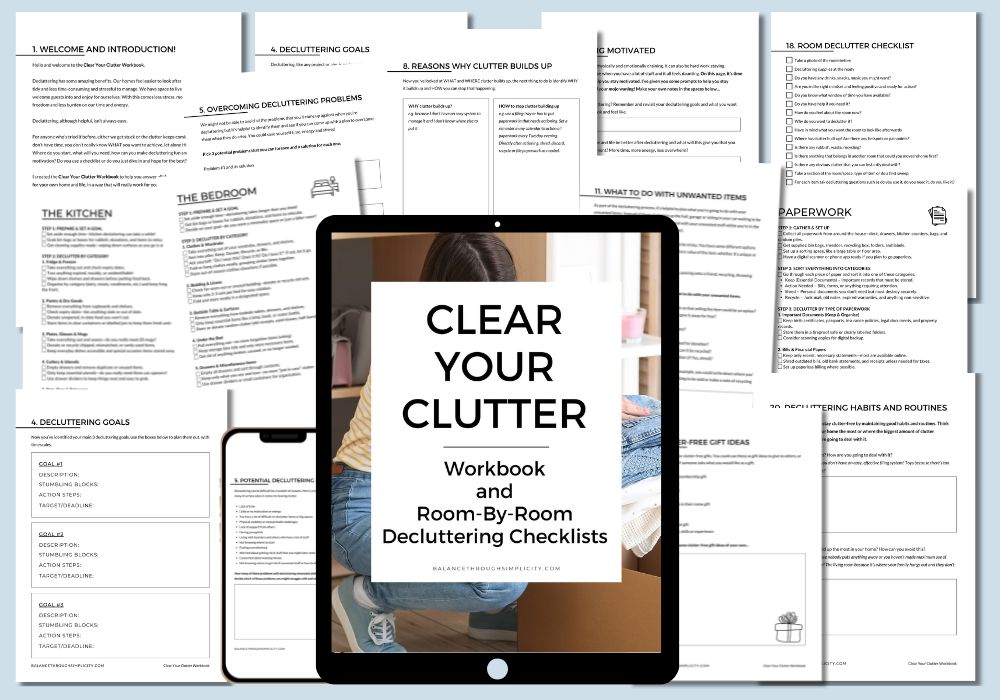
Decluttering can feel overwhelming when you’re looking at your whole house and trying to decide where to start. That’s exactly why I created my Clear Your Clutter Workbook.
It’s a practical, easy-to-follow guide that walks you through the decluttering process step by step, room by room, so you always know what to focus on next. Instead of trying to tackle everything at once, you can work through the workbook at your own pace, building momentum and confidence as you go.
If you’d like a clear plan to help you create a safer, calmer, and more manageable home, it could be just the support you need.
Click here to learn more about Clear Your Clutter.
And over to you… Have you ever helped an older relative, friend, neighbour, or parent declutter their home? Did it change the way you think about clutter and what we really need to keep?
I’d love to hear your experiences in the comments below.
Hi Beth, thank you for reading. I’ll keep your request for photos in mind for the future! Good luck with the decluttering. Bedroom side tables are a great self-contained project so I hope it goes well 🙂
Hi Nancy, yes I agree. Little changes feel much more realistic!
Very interesting article Antonia. I’m helping my Mum with some stuff in her home and little changes do actually help. Thanks!
Nancy
Please show us readers pics of your aunt’s home after declutterring. You described the process so well but would love a few pics of the results. The bookcase itself looked overwhelming. Thanks so much for suggestions where to start. I know I am starting in our bedroom side tables next to bed with so much paperwork like articles from magazines and loose papers. Then forward to drawers in our bookcases. Thanks