
Does Your Home Feel Cluttered Even When It’s Tidy? 7 Ways Visual Clutter Builds Up
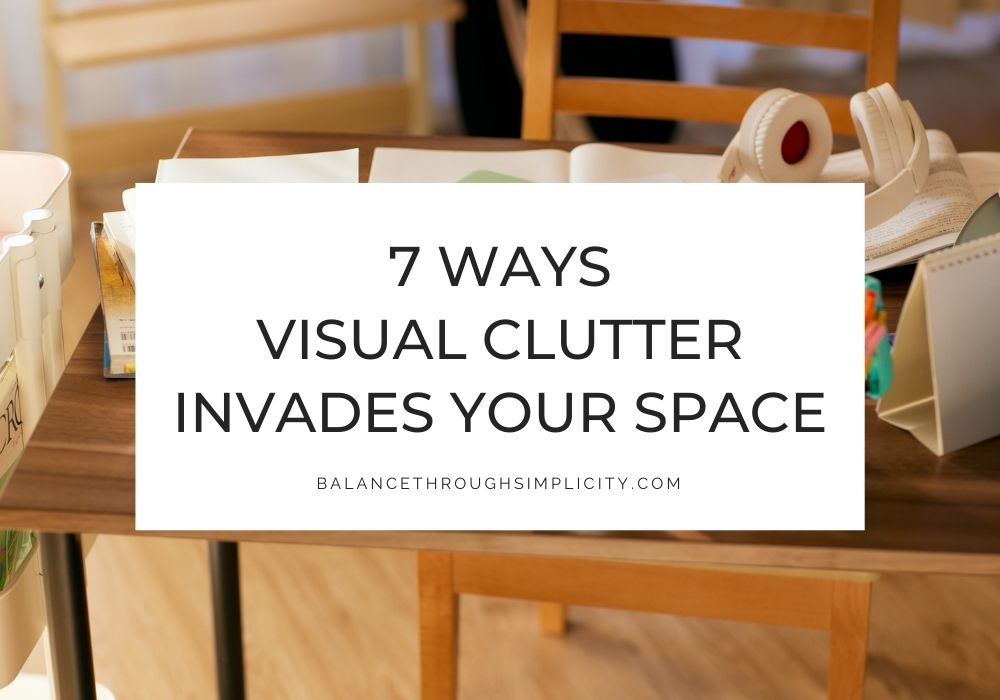
Visual clutter isn’t just mess—it’s the everyday stuff that quietly overwhelms your space and your mind. Even small piles of papers, random items on counters, or scattered belongings can make a room feel chaotic and stressful. In this article we look at 7 ways visual clutter invades your space and how to take it back.
WHAT IS VISUAL CLUTTER?
Clutter isn’t just “mess on the floor” or stacks of things piled in corners. Visual clutter—the things we see every day that create a sense of chaos—can quietly erode our focus, energy, and peace of mind. It’s the mail left on the kitchen counter, the pile of books on your bedside table, or a jumble of toys in the living room. Even when a space is technically “tidy,” our brains notice every little distraction.
I’ve experienced this myself. On days when my surfaces are crowded or objects are scattered, I feel mentally scattered too, even if I have no urgent tasks. Visual clutter can subtly signal to your brain that there’s unfinished business, generating tension and reducing clarity.
The good news is that visual clutter is manageable. By understanding how it sneaks into our lives, we can take simple, intentional steps to start decluttering, to reclaim our spaces and, with them, our sense of calm.
7 WAYS TO MANAGE VISUAL CLUTTER
Here are seven ways visual clutter invades your space, along with practical steps to regain control.
1. Overflowing Surfaces
Your eyes are naturally drawn to what’s right in front of you. Counters, desks, coffee tables, and nightstands are especially vulnerable because we interact with them constantly. Even small piles—a few pieces of mail, a mug, or a notebook—can accumulate quickly, turning a surface into a visual “noise zone.”
The problem is that overflowing surfaces don’t just look messy—they signal unfinished tasks to your brain. That visual reminder creates a subtle, constant sense of pressure, even when you consciously tell yourself it’s “fine.” Experts in psychology suggest that a cluttered environment can increase cortisol, the stress hormone, which is why messy surfaces often leave you feeling uneasy.
Try this:
- Choose one surface per week to clear completely. Remove everything, wipe it down, and only return what’s necessary or truly brings joy.
- Use a tray, basket, or container to keep small items together. This simple containment system makes surfaces feel cleaner instantly.
- Develop a daily habit of clearing surfaces before bed. It only takes a few minutes and can reset your mental state for the next day.
Further Reading: Decluttering Kitchen Counters and Keep Them Clutter-Free
2. Hidden Overflow in Drawers and Cabinets
Clutter isn’t always obvious. Drawers, cupboards, closets, and shelves often harbor small items we don’t see—but they affect us subconsciously. A kitchen drawer stuffed with miscellaneous tools, or a bedside table crammed with papers, creates what psychologists call “cognitive load,” where your brain is constantly processing disorganised stimuli, even if you aren’t aware of it.
The hidden clutter also makes it harder to maintain tidiness on surfaces. When everything has no clear home, it’s tempting to “stash” items out of sight temporarily, which only postpones the problem.
Try this:
- Tackle one drawer or cabinet at a time in short, timed sessions. Even 10–15 minutes can make a noticeable difference.
- Use dividers, small containers, or boxes to keep items organised within the drawer.
- Keep a small donation or discard box nearby. Removing items you no longer need reduces clutter permanently, rather than just shuffling it around.
Further Reading: Hidden Clutter Spots and How To Deal With Them

3. Too Many Decorations or Visual Noise
Our homes reflect our personalities, but too many decorative items, bright colours, or patterned surfaces can create visual chaos, especially in smaller homes. While a curated décor can feel comforting, excessive visual stimulation can be mentally exhausting. According to environmental psychology research, environments that are “visually busy” can reduce focus and make it harder to relax.
Even meaningful items—photos, souvenirs, collectibles—can contribute to clutter when displayed without boundaries. It’s not about removing everything you love; it’s about balance and intentionality.
Try this:
- Edit decorative items down to a few key pieces per room. Keep what sparks joy or has meaning.
- Use neutral colours for large surfaces like walls, floors, and furniture to create a calming base.
- Rotate items seasonally rather than displaying everything at once. This keeps your space fresh and prevents overstimulation.
Further Reading: 32 Things That Make Your Home Look Cluttered
4. Paper and Digital Clutter
Clutter isn’t limited to physical objects. Paper and digital items—bills, magazines, sticky notes, email inboxes, and open browser tabs—can create mental noise. Even if the mess isn’t “visible” to others, it’s constantly registering with your brain. Each piece of paper or digital notification can act as a reminder of unfinished business, reducing your ability to focus and relax.
This kind of clutter is particularly insidious because it feels necessary: we keep paper for reference, sticky notes to remind us, and tabs open “just in case.” But this accumulation creates a background of stress.
Try this:
- Create a simple filing system for mail and important papers, and schedule weekly sessions to clear it.
- Limit sticky notes to a single visible spot or switch to a digital note-taking system to reduce scattered reminders.
- Close unnecessary tabs on your devices regularly; even minor reductions in digital clutter can boost focus.
Further Reading: 20 Quick Ways to Get Rid of Paper Clutter Right Now

5. Personal Items Without a Home
Keys, shoes, chargers, bags, and other personal items often lack designated storage spots. Without clear homes, even a few items scattered around can make a room feel chaotic and reduce efficiency when you need them.
Experts in home organisation emphasise that “everything has a home” as a foundational principle. When items have a consistent place, it reduces the cognitive load of searching and keeps your environment visually calm.
Try this:
- Assign specific spots for daily-use items, like a hook for keys or a basket for chargers.
- Make returning items to their home part of your routine before leaving a room.
- Consider multi-functional furniture—like benches with storage—to create practical homes for items that tend to wander.
Further Reading: Why Declutter Instead of Organise if You’re Struggling With Stuff
6. Cluttered Collections
Books, toys, craft supplies, or even sentimental objects can accumulate quickly. Collections aren’t inherently bad—they reflect hobbies, memories, and personality—but without limits, they can overwhelm space and attention.
The key is to create boundaries around collections. Without them, even small, meaningful items can produce stress rather than joy. Curating collections ensures they enhance your space instead of dominating it.
Try this:
- Limit collections to shelves, baskets, or containers that clearly define boundaries.
- Rotate items in and out if space is limited. For instance, toys or craft supplies can be swapped seasonally.
- Be selective about what you display—keep items that are used or genuinely spark joy.
Further Reading: Decluttering Craft Supplies for Creativity and Joy
7. Cluttered Mind, Cluttered Space
Our mental state and physical environment are deeply connected. Stress, overcommitment, and emotional overwhelm often lead to clutter because energy and focus are limited. In turn, cluttered surroundings reinforce mental fatigue—a cycle many people experience without realising it.
Breaking this cycle isn’t about grand overhauls; it’s about small, intentional steps that create momentum and clarity. Even brief periods of decluttering can improve mood and mental clarity.
Try this:
- Consider how often you should declutter and create a routine that works for you
- Schedule a weekly “reset” for your home, even if it’s just 20 minutes. Focus on one small area rather than the entire house.
- Use mindful decluttering: notice how items make you feel, not just whether you “need” them.
- Celebrate small wins. Each cleared surface or organised drawer is progress toward a calmer, more intentional home.
Further Reading: 10 Negative Effects of Clutter in Your Home and Life

WANT SUPPORT TO CLEAR YOUR CLUTTER?
Decluttering isn’t easy. Sometimes it’s difficult to know where or how to start decluttering and, in the meantime, the clutter keeps coming in. I know how that feels and it’s frustrating!
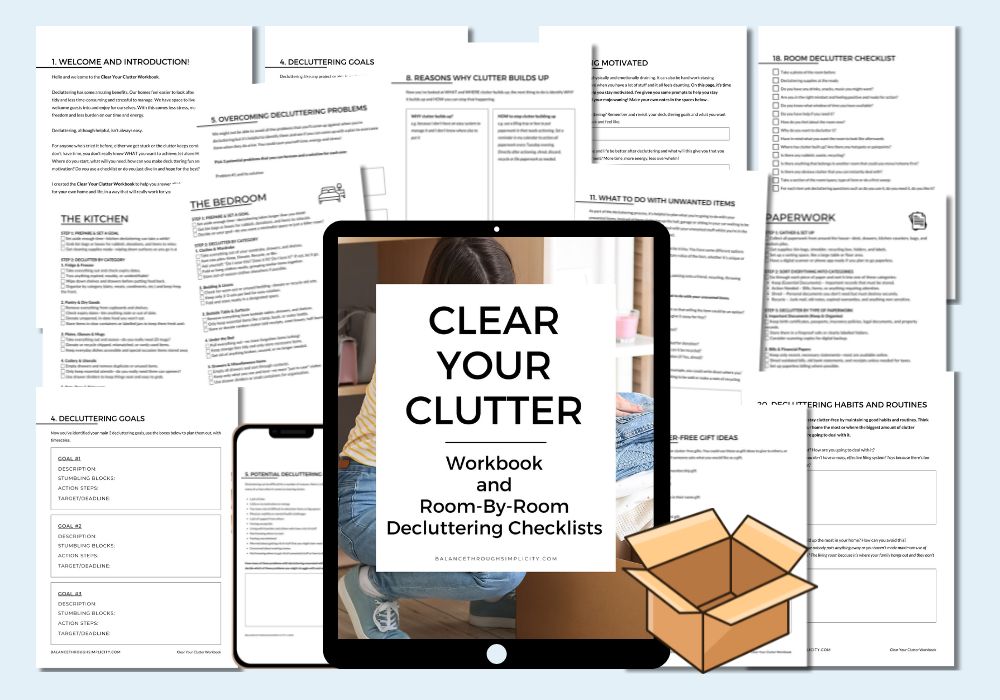
So, to help you go from cluttered to calm, I’ve put together the Clear Your Clutter Workbook. It’s packed with questions, tips and room-by-room decluttering checklists to help you get rid of visual clutter and other types of clutter, easily and without stress.
Click here to learn more about Clear Your Clutter.
CONCLUSION
Visual clutter invades our homes in more ways than we often realise. From overflowing surfaces to hidden drawers, digital chaos to collections, each form of clutter chips away at our mental clarity and sense of calm. By understanding where clutter hides and implementing small, consistent strategies, you can reclaim your space—and with it, your focus, energy, and peace of mind.
And over to you… Which type of visual clutter shows up most in your home? Pick one area to tackle this week and notice the difference it makes—not just in your space, but in how you feel. Share your experiences in the comments below; celebrating small wins together can inspire even bigger changes.